Local News · Community
Community Needs: Finding Recovery Through Connection, Support and Hope
By Sarah Hampton ·
Part Two of a Three-Part Community Needs Series
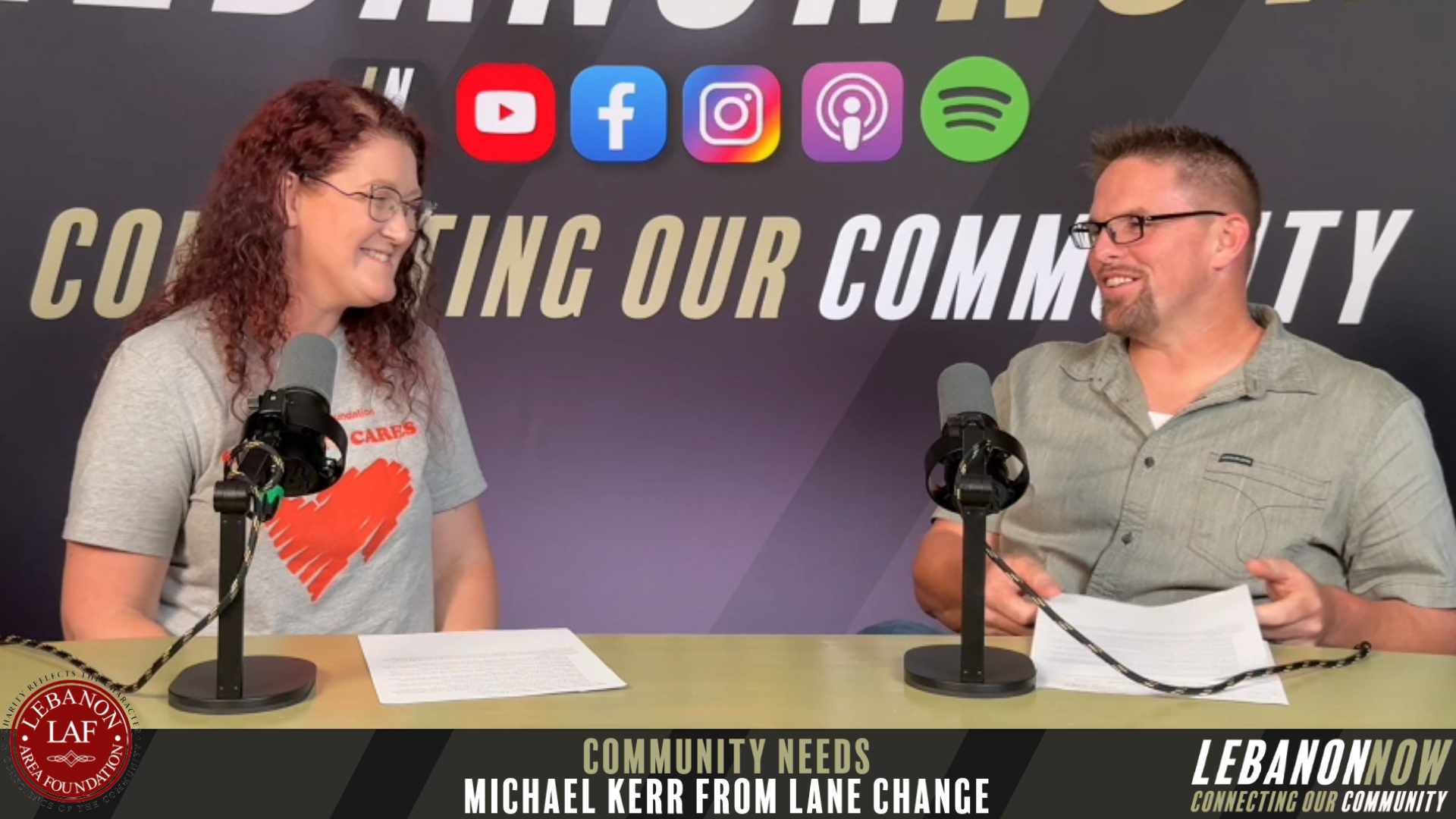
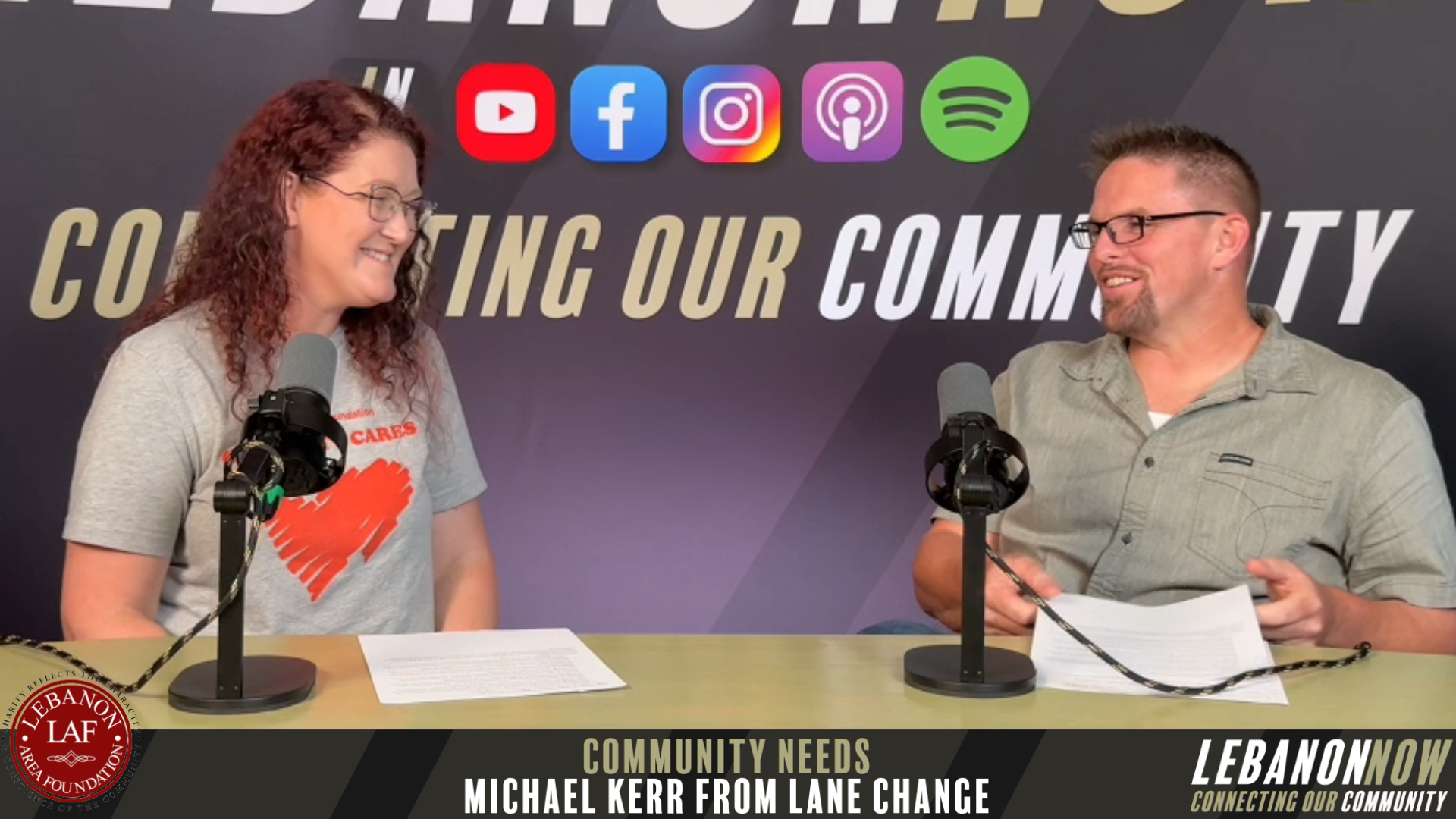
The September Community Needs series with Melinda Fries from the Lebanon Area Foundation, brought to the community by Lebanon Now, continues with a conversation about addiction, recovery, isolation and the importance of finding people who refuse to give up on you.
In Part One, the series focused on physical health, strength, discipline and community with Tim Cole of The Gym 24/7.
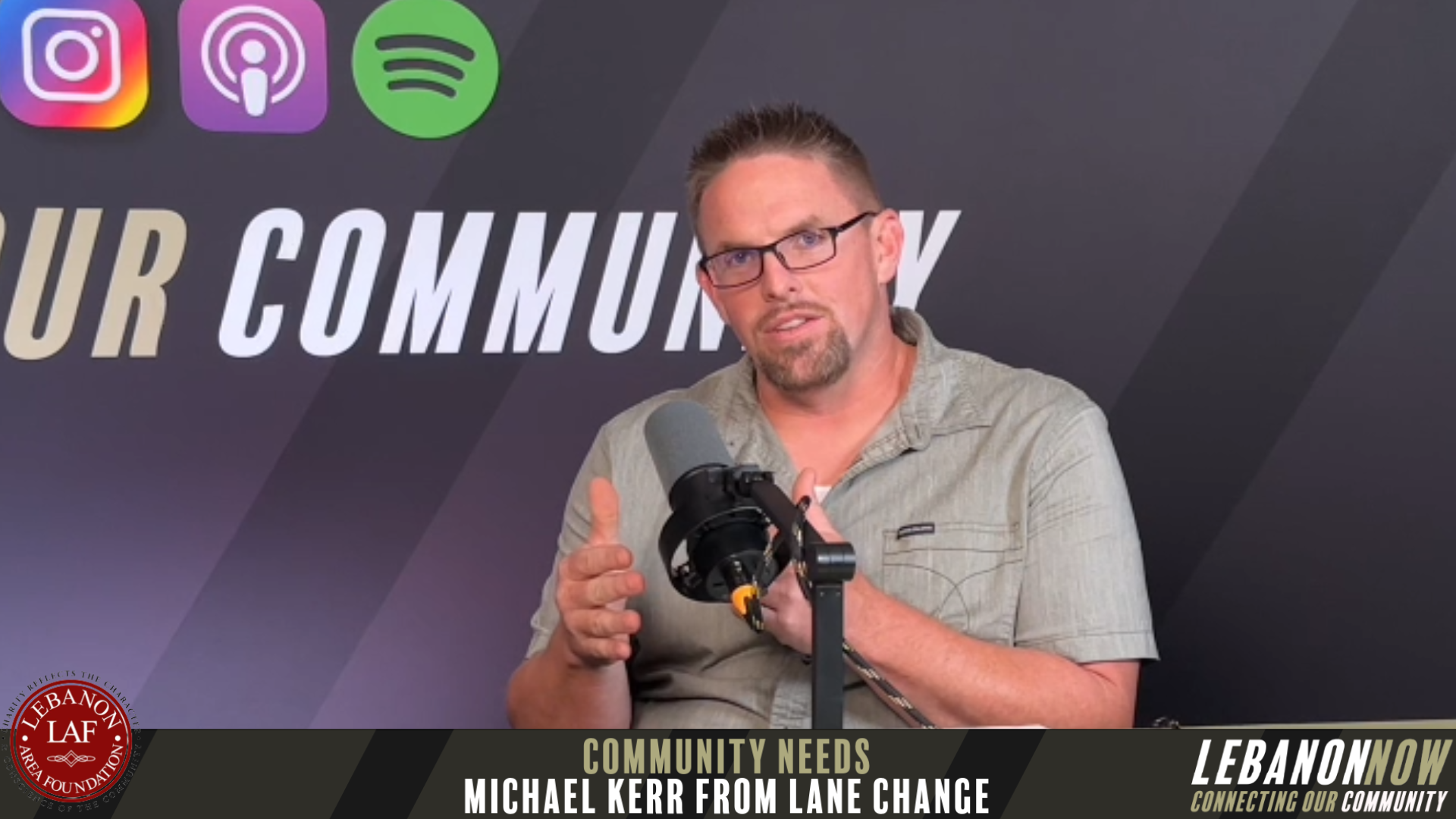
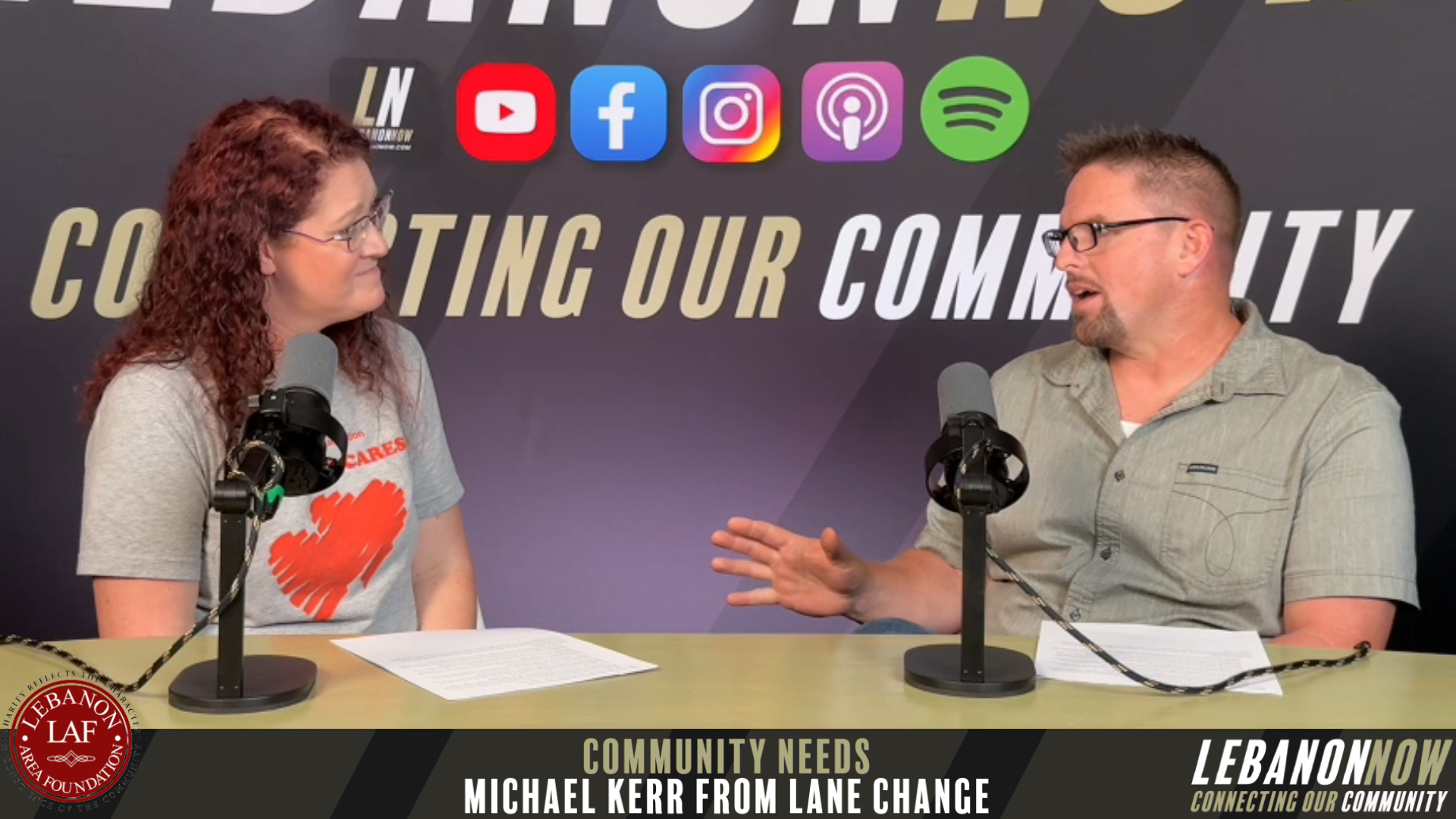
Part Two turns to recovery and peer support with Michael Kerr, a peer support specialist at Lane Change in Lebanon who brings both professional experience and 16 years of personal recovery to his work.
For Kerr, the mission of Lane Change is centered on something simple but powerful: hope.
“Lane Change exists to bring hope to our community by supporting lasting recovery through compassion, connection and Christ-centered care,” Kerr said, reading the organization’s mission statement. “We envision lasting recovery that strengthens the individual, restores family and changes the future of our community for generations.”
Kerr said that mission ultimately comes down to loving people and showing them that lasting recovery is possible.
Breaking Through Isolation
For men struggling with addiction or recovery, isolation can become one of the greatest dangers.
Kerr compared it to a gazelle becoming separated from the herd while a lion waits nearby.
“Addiction is always trying to drive me away from the pack,” Kerr said. “It’s trying to get me separated from everybody, secluded and isolated because of the thoughts that are going on in my mind.”
Even after 16 years in recovery, Kerr said he still works with a mentor and still experiences struggles.
The difference is that he no longer believes he has to face them alone.
Coming together with a recovery community or a strong support system, he said, can make all the difference.
That can be particularly difficult for men who grew up believing problems should simply be endured quietly.
Kerr described it as a lingering “John Wayne syndrome,” where men are expected to pull themselves up by their bootstraps, keep moving and avoid talking about what they are experiencing.
That silence, he believes, can carry consequences into the next generation.
“The battles that I don’t fight today, my kids are fighting today or tomorrow,” Kerr said.
Peer Support From Someone Who Has Been There
Much of the work at Lane Change centers around peer support.
Unlike a traditional clinical setting, peer support allows someone struggling with addiction or recovery to sit across from another person who has lived through similar experiences.
That shared experience can immediately change the conversation.
Kerr said someone may walk through the door after leaving prison, treatment or another difficult situation and feel completely out of place.
Lane Change’s goal is to meet that person exactly where they are.
“We can meet him exactly where he’s at,” Kerr said. “I’ll share my experience, and that’s what most of us do. We’ll share our experience to let down those walls.”
Kerr said that lived experience is one of the most valuable tools peer support specialists have.
Rather than approaching someone as a problem that needs to be fixed, they can begin with a conversation that says, in effect, “I’ve been there too.”
What Happens When Someone Walks Into Lane Change?
Kerr said people do not need to have everything figured out before walking through the door.
Lane Change accepts walk-ins from 9 a.m. to 5 p.m. Monday through Thursday and from 9 a.m. to noon on Fridays.
The first thing someone should expect, he said, is to be met with compassion rather than judgment.
“Come on in,” Kerr said. “We will have somebody there that will meet you at the door with love.”
Some people arrive voluntarily. Others may be referred through probation and parole, employers or other organizations in the community.
Regardless of how someone arrives, Kerr said the first priority is helping them become comfortable enough to have a conversation.
That may mean sitting down privately and beginning with his own story.
Kerr said he went through six treatment programs, mental health institutions and the Department of Corrections before eventually finding lasting recovery.
“I was a guy that everybody said, ‘He’s not gonna get any better. He’s the one that we’re gonna give up on,’” Kerr said.
Today, his life looks very different.
He works in peer support, serves as a youth pastor, is married and is raising a family.
Sharing that journey can help someone sitting across from him begin to believe change may be possible for them as well.
“As I walk through that personal story with them, that’s when the walls come down,” Kerr said.
There is paperwork involved, but Kerr said Lane Change tries to keep the process from becoming another overwhelming obstacle.
“The primary thing is the person,” he said.
“Your Story Isn’t Done Yet”
For someone who feels stuck in addiction or who has tried recovery before without success, Kerr’s message is simple.
Take one more step.
He knows personally how difficult that can be.
Kerr said he began using substances while he was still in elementary school. His addiction continued through adolescence, treatment programs, dropping out of high school, incarceration and mental health treatment.
There were people along the way who continued to give him another chance, even after he had given up on himself.
“I had people through discipleship housing, they didn’t give up on me,” Kerr said. “I had given up, and they didn’t give up on me.”
He said addiction can begin to feel like losing a longtime friend, even when someone knows that relationship is destroying their life.
That makes taking the first step into recovery frightening.
Kerr encourages people in that position to find those who will continue showing up.
“Take one step of courage,” he said. “Go one more time.”
At Lane Change, Kerr said people are treated as individuals, not simply as another name on a caseload.
“Your story isn’t done yet,” he said. “The things that you’re going through are temporary. Reach out. Don’t walk through it alone. There’s people that care about you that you don’t even know yet.”
Addiction, Mental Health and Suicide
The September Community Needs series is focused specifically on men’s physical, mental and emotional health, including the ways those areas can intersect during a crisis.
For Kerr, addiction and mental health are deeply connected.
He spoke openly about reaching a point in 2010 when he was prepared to end his life.
His brother found him.
“I wouldn’t be here today if not,” Kerr said.
Kerr said addiction can feed the internal voice telling someone they are worthless, unwanted or beyond help.
That is one reason he emphasizes both identity and community in his work and in his role as a youth pastor.
“The company that I’m keeping around me is vital to where I wanna go,” Kerr said.
Support may need to happen more than once a week.
For some people, it can mean multiple support meetings, peer support, counseling, church groups, recovery programs or other positive communities.
The exact source of support may look different for each person, but Kerr’s point remains the same: isolation can be dangerous, and connection matters.
Finding Your People
Faith plays a central role in Kerr’s personal recovery and in Lane Change’s Christ-centered mission.
He encourages people who are comfortable with faith-based support to find a church, small group or ministry where they can develop meaningful relationships.
But the broader message of the conversation extends beyond any single organization.
People need people.
Someone who is not comfortable with church can still seek out recovery groups, peer support programs, counseling, mentors or other communities built around positive connection.
Families also do not have to carry the entire burden themselves.
A parent, spouse or loved one may desperately want to be the person who fixes everything, but sometimes the person struggling needs someone outside the family who understands what they are experiencing.
Peer support can provide exactly that.
It can also help families connect with additional resources and build a wider support system around the person they love.
Recovery Is Possible
Kerr’s own story is evidence that recovery does not always happen on the first attempt.
Or the second.
Sometimes it takes multiple treatment programs, multiple failures and multiple people willing to say, “Try again.”
Sixteen years into his own recovery, Kerr now spends his time being one of those people for someone else.
His message to men struggling with addiction, mental health or hopelessness is not that recovery will be easy.
It is that they do not have to do it alone.
Part Three of the September Community Needs series, Melinda will continue the conversation with Pastor Kelly Rhoades, representing Lifepoint Church and Lifepoint Community Counseling, with a focus on counseling, mental health support and knowing when and where to seek professional help.
The September Community Needs series with Melinda Fries is presented by the Lebanon Area Foundation and brought to you by Lebanon Now.