Local News
Former Ice Cream Factory employees describe missing pay, depleted savings and weeks of uncertainty
By Lebanon Now Staff ·

FULL INTERVIEW ON YOUTUBEFormer Ice Cream Factory employees describe missing pay, depleted savings and weeks of uncertainty
Three former Ice Cream Factory employees say they left the Lebanon business still waiting for money they earned, describing months of late paychecks that disrupted mortgage payments, drained savings and made it difficult to plan even a week ahead.
Robert Campbell, Devin Franco and Eloy Franco Gonzalez spoke about their experiences in a September 24 interview. Their accounts are accompanied by payroll statements, written requests for help recovering wages and Campbell’s termination paperwork.
Four payroll statements supplied by Franco and Gonzalez list a combined $2,126.97 in net pay that they say remains unpaid. That figure does not include an additional paycheck Gonzalez described in the interview or the money Campbell says he is owed.
The men said they continued working because they believed the business could improve. By the time they left in late August and early September, they said, the uncertainty over payday had become something they could no longer afford.
“I just want to be paid so I can wash my hands and move on,” Gonzalez said.
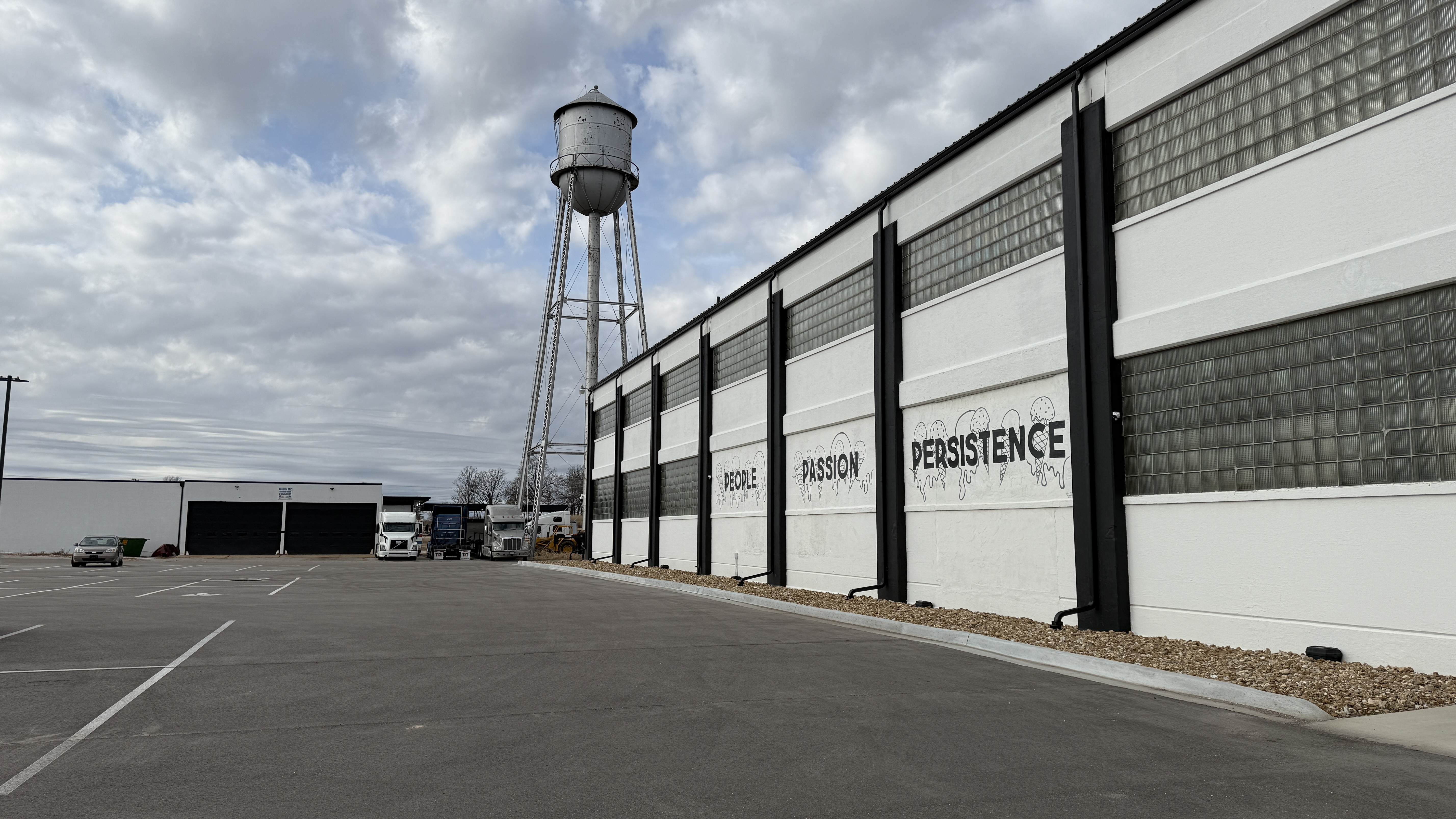
Workers describe a recurring problem
Franco worked in the warehouse for approximately four months. He said problems receiving pay began during his time there and that he was still missing two weekly checks.
Gonzalez, who identified himself as the warehouse manager, said he worked at the company for approximately nine months. He said pay began arriving late about two months into his employment and that the problem continued for at least six months.
At the time of the interview, Gonzalez said he was owed three weekly paychecks.
Campbell said payroll initially arrived regularly after Gail Kurpgeweit took over, with employees paid on Fridays during November, December and January. He said the delays began in February.
“Excuse after excuse,” Campbell said.
The employees described being told that delays involved payroll processing, submission timing or banking issues. They repeatedly referred to explanations involving Relay. Franco said he was also told banks were declining checks.
Those explanations appear in the written materials as well. In signed requests for assistance recovering wages, Franco and Gonzalez both described repeated references to problems with Relay.
The records do not establish that a payroll provider or bank caused the delays.

What the pay statements show
Franco says he is still owed $992.79 for two weeks of work in August. He provided pay statements showing those amounts and said the missing wages left him struggling to cover expenses.
In a signed September 22 request for assistance, Franco said he had not been paid for those two workweeks. He listed August 27 as his final day and wrote that the delays had forced him to drain his account to cover expenses and had resulted in an overdraft.
Gonzalez’s supplied payroll statements identify him as warehouse manager at $25 an hour. His first name is printed as “Elroy” on the statements; he identified and spelled his name as Eloy during the interview.
One statement covers August 23 through August 29, listing approximately 33.82 hours, gross earnings of $845.42 and net pay of $699.21. The listed pay date is September 10.
The other covers August 30 through September 5, listing approximately 19.87 hours, gross earnings of $496.67 and net pay of $434.97, with a September 15 pay date.
Those two statements total $1,134.18 in net pay. They cover the two workweeks identified in Gonzalez’s signed September 18 request for assistance. His interview account included a third unpaid paycheck, whose amount is not included in that total.
The payroll documents are informational statements marked “VOID” and “THIS IS NOT A CHECK.” They document calculated earnings and deductions; they are not negotiable checks or, by themselves, evidence that money reached the employees.

The cost beyond payday
For the employees, the consequences extended beyond the missing amounts.
Campbell described trying to keep up with a mortgage, a vehicle payment and groceries while waiting for pay.
Franco said an anticipated paycheck failed to arrive while he was preparing to pursue an apartment. The uncertainty interrupted his plans to move forward.
“Can’t really rely on it,” he said.
Gonzalez said he initially had enough savings to absorb delays. Over time, he said, that cushion disappeared, bills were paid late and his credit suffered.
“You shouldn’t have to pick and choose what you can do,” he said, describing decisions between housing, a truck payment, fuel and food.
His written request similarly describes late charges, damage to his credit and depleted savings. Both he and Franco requested their wages plus interest.
Gonzalez said he stayed because he thought he had found a lasting career.
“I thought I was going to be a part of something,” he said. “I seen a future there.”
Franco said he had considered leaving earlier but stayed after being told conditions might improve.
Termination paperwork cites lack of work
Campbell’s Ice Cream Factory and PNC Brands Group termination form identifies him as a key account manager in the customer success department.
Dated August 31, 2026, it marks his departure as an involuntary dismissal and gives the reason as “Lack of Work.”
The form lists September 11 as the final paycheck issuance date. An accompanying exit-interview page lists August 31 as the completion date and names Gail Kurpgeweit as the person who conducted it.
Campbell nevertheless said during the interview that money remained owed to him. No payroll statement establishing his outstanding amount was included with the supplied documents.
He also said Kurpgeweit told him she would not oppose his unemployment claim, but that he subsequently encountered an employer challenge and had to submit additional paperwork. The supplied materials do not include an unemployment determination.
Asked what would make the situation right, Campbell answered: “Pay me. Pay me what you owe me.”
Despite his frustration, he said he had enjoyed developing relationships with grocery-store and gas-station customers through his sales work.
A federal fraud case in Washington
The employees’ accounts come as Kurpgeweit’s earlier financial history has drawn public attention.
A June 2, 2000, report in The Spokesman-Review documented her guilty plea in a federal case involving $227,584.70 taken from a dozen local residents and Seafirst Bank.
Operating Washington Paralegal, Kurpgeweit had access to client funds through services including real estate closings and loan consolidations. The newspaper described transfers between a client trust account and business accounts, with money used for operating expenses.
The report said an FBI investigation began in fall 1998 and that Kurpgeweit came forward early in the investigation and agreed to plead guilty. It was published before sentencing. The Spokesman-Review, June 2, 2000
The resulting federal bank-fraud case, United States v. Kurpgeweit, No. 2:00-cr-00117-WFN-1, carried a sentence of five months in prison, five months of home detention and five years of supervised release, with restitution of approximately $229,922.30.
The restitution amount is separate from the amount reported in the newspaper’s account of the guilty plea.
Subsequent bankruptcy proceedings
Kurpgeweit’s financial history also includes Chapter 7 bankruptcy proceedings in 2003 and 2014, followed by Chapter 13 proceedings in 2015 and 2019.
The 2003 Chapter 7 case, No. 03-04601-PCW7, was filed May 29, 2003, and a discharge was entered August 27 that year. A related Bank of America proceeding involved approximately $63,853.46 plus interest and ended in a stipulated resolution that left the debt nondischargeable.
The 2014 Chapter 7 case, No. 14-18573-TWD, was filed November 26, 2014. It listed approximately $588,081.81 in scheduled claims, with a discharge entered April 10, 2015.
A Chapter 13 case, No. 15-13122-TWD, followed on May 20, 2015. It involved amended repayment plans, trustee objections and dismissal proceedings before being dismissed November 21, 2017.
The 2019 Chapter 13 case, No. 19-12785-TWD, was dismissed February 11, 2026, for failure to make plan payments and closed March 17.
These proceedings provide historical context. They do not establish the cause of the current payroll problems described by the former employees or constitute a finding of new criminal wrongdoing.
Kurpgeweit addresses her past
In a September 23 interview with KY3, Kurpgeweit acknowledged the earlier bank-fraud conviction and imprisonment. She described the conduct as a mistake made during a period of desperation and said her past did not define her current business efforts.
She also told KY3 that she intended to continue putting personal assets into Ice Cream Factory until the business could support itself. The published report did not address the specific unpaid-wage amounts described by Campbell, Franco and Gonzalez. KY3, September 23, 2026
For the three former employees, the immediate concern remains the work they have already done.
At the September 24 interview, Franco said he was looking for another job. Campbell said he had two interviews scheduled for the following day. Gonzalez described wanting to recover his pay and leave the experience behind.
“I just want to be paid,” he said.