Local News · Government · Public Safety
Lebanon Police Launches Transparency Page for Flock Camera Program, Proposed Ordinance Coming Before Council
By Lebanon Now Staff ·
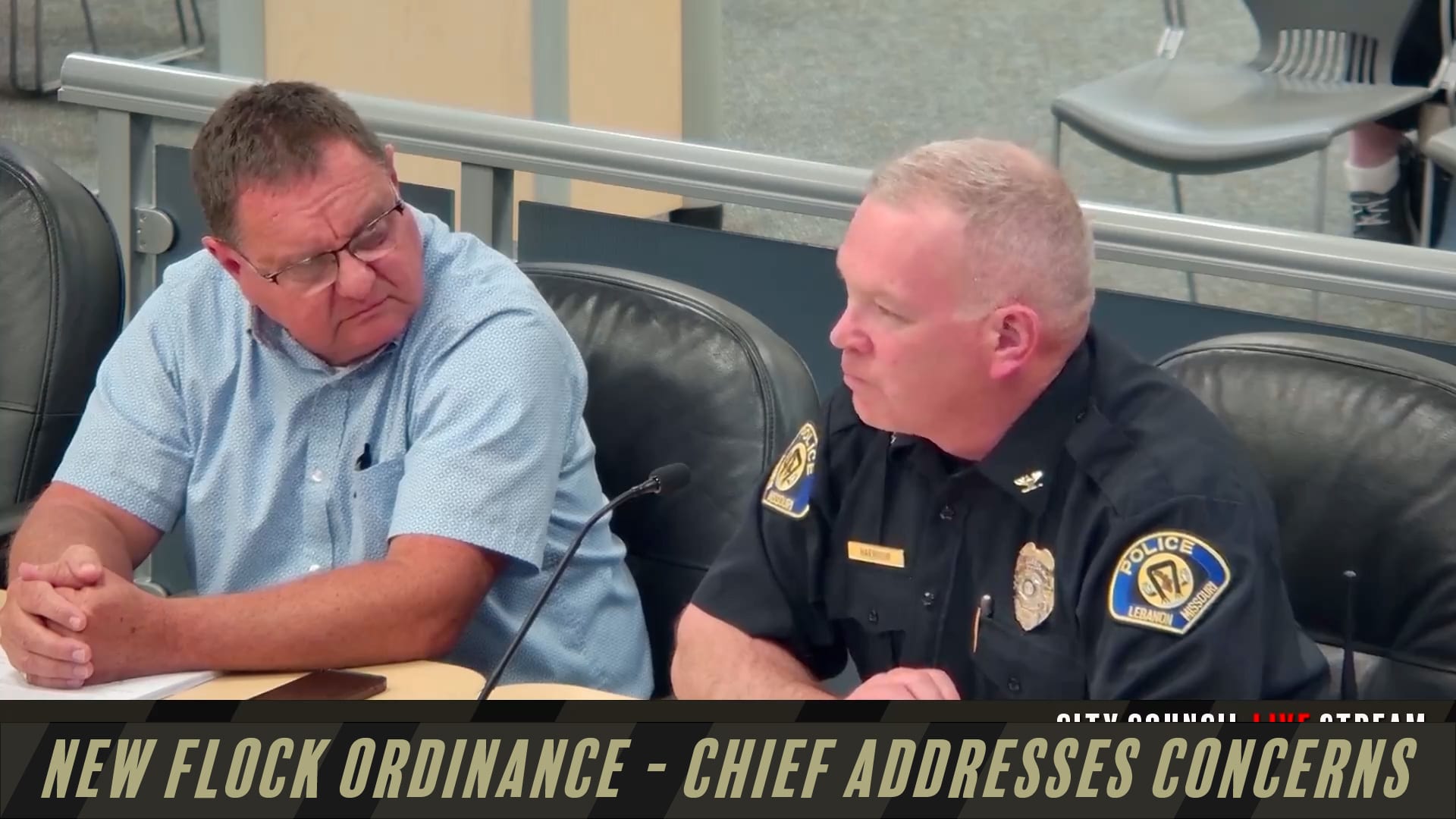

LEBANON, Mo. — Lebanon Police Chief Jerry Harrison is directing residents to a new online transparency resource as questions and concerns continue to circulate about the city’s use of automated license plate reader cameras.
During comments at Monday night’s Lebanon City Council meeting, Harrison said there is a significant amount of information being shared about Flock cameras, some of which he said is inaccurate.
“There’s a lot of information floating around out there about Flock, and you might be surprised to know that a lot of it’s inaccurate,” Harrison told the council. “If you want to get good information, you can go to our camera and transparency page on the police department’s website.”
The new page brings together information about Lebanon’s automated license plate reader, or ALPR, program, including a letter from Harrison to the community, the department’s policies, a proposed city ordinance, audit information and access to Flock’s transparency portal.
What Lebanon’s cameras collect
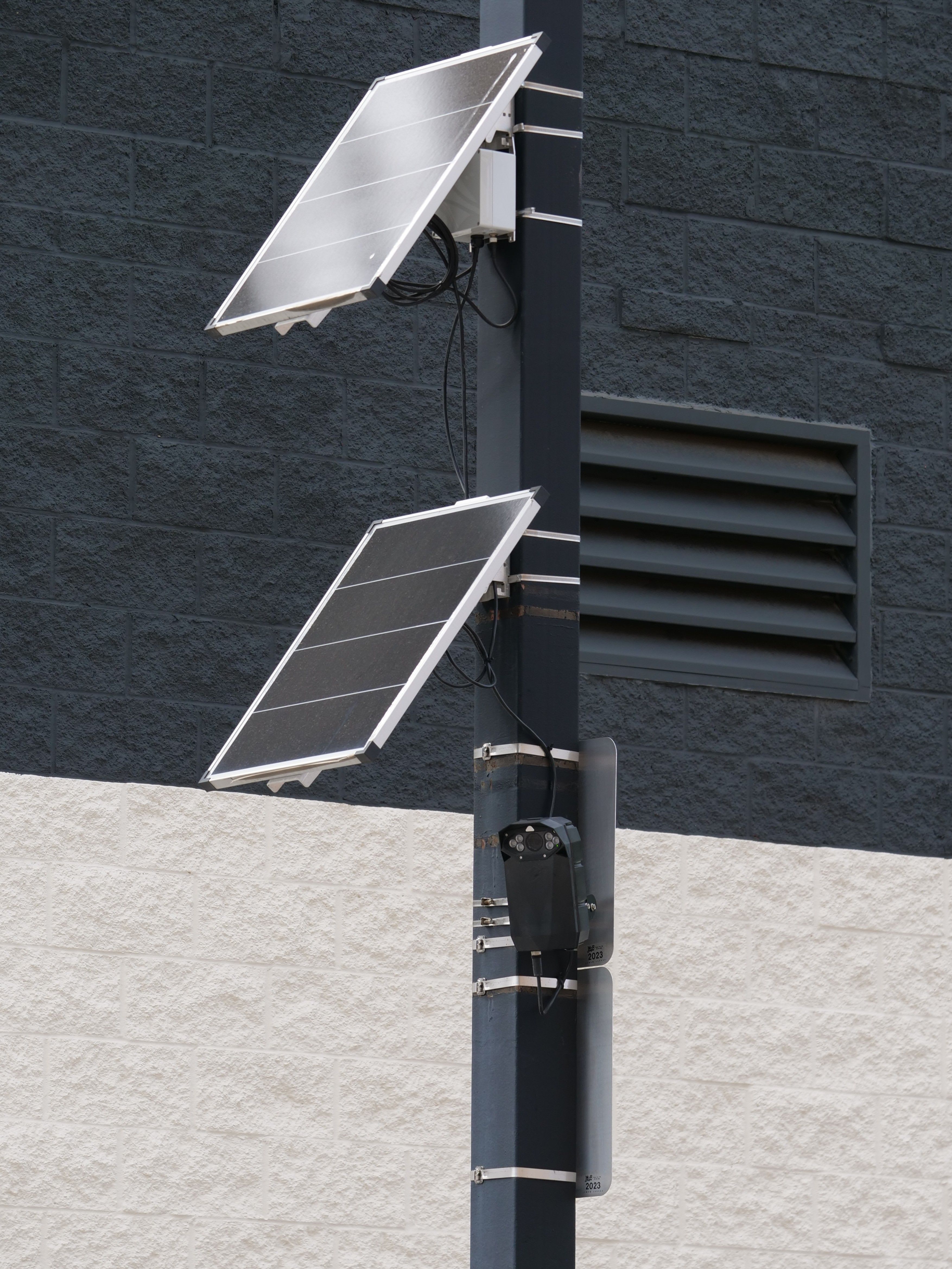
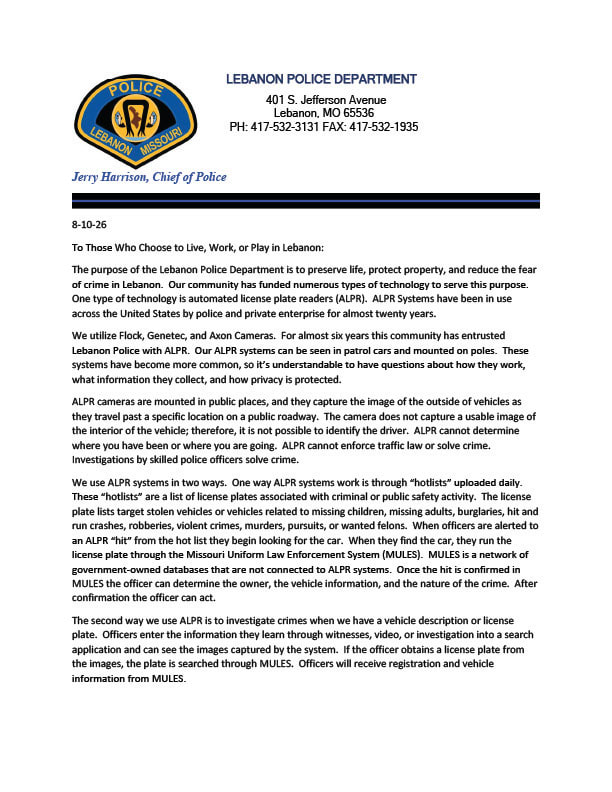
In a letter dated Aug. 10, Harrison said the Lebanon Police Department uses Flock, Genetec and Axon cameras as part of its ALPR program, with license plate reader technology having been used by the department for nearly six years.
According to Harrison, the cameras are positioned in public places and capture images of the exterior of vehicles traveling on public roadways. He said the cameras do not capture a usable image of a vehicle’s interior and cannot identify the driver.
“ALPR cannot determine where you have been or where you are going,” Harrison wrote. “ALPR cannot enforce traffic law or solve crime. Investigations by skilled police officers solve crime.”
The department says the system is primarily used in two ways.
The first involves “hotlists” of license plates associated with criminal or public safety matters, including stolen vehicles, missing people, burglaries, hit-and-run crashes, robberies, violent crimes, murders, pursuits and wanted felons. When an officer receives an ALPR hit, the plate is separately checked through the Missouri Uniform Law Enforcement System, or MULES, before action is taken.
The second use allows investigators to search captured images when they have information about a vehicle connected to an investigation. If investigators identify a license plate through those images, they can then use MULES to obtain registration and vehicle information.Read the Full letter to the public here:
Audits and 30-day image retention
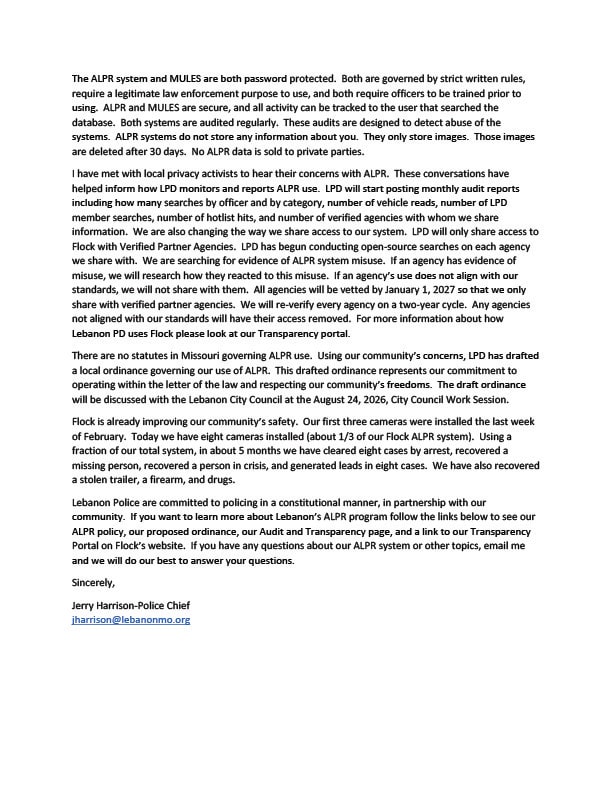
Harrison said both the ALPR system and MULES are password protected, require a legitimate law enforcement purpose and track activity back to individual users.
According to the department, the systems are regularly audited for potential abuse. ALPR images are deleted after 30 days, and the department says ALPR data is not sold to private parties.
During Monday’s council meeting, Harrison said monthly audits will soon be added to the transparency page.
“We have our most recent audit,” Harrison said. “We just need a little bit of time to get it compiled and get it posted.”
The department plans to publish monthly reports showing information including searches by officer and category, vehicle reads, department member searches, hotlist hits and the number of verified agencies with which information is shared.
Changes coming to information sharing
The department is also changing how other law enforcement agencies receive access to Lebanon’s Flock system.
Harrison said LPD will share access only with “Verified Partner Agencies.” The department has begun conducting open-source reviews of agencies receiving access, looking for evidence of previous ALPR misuse and how agencies responded to any misuse that occurred.
All agencies are expected to be vetted by Jan. 1, 2027, with agencies reverified every two years. Access will be removed from agencies that do not meet Lebanon Police Department standards.
Local ALPR ordinance headed to council work session
One of the most significant items included on the transparency page is a proposed city ordinance governing Lebanon Police Department use of automated license plate readers.
According to Harrison’s letter, Missouri currently has no statutes specifically governing ALPR use. The department drafted the local ordinance following community concerns about the technology.
The proposed ordinance is scheduled to be discussed by the Lebanon City Council during its Aug. 24 work session.
Harrison also referenced the proposal during Monday’s meeting, encouraging residents with opinions on either side of the issue to review the information before the upcoming discussion.
“I’d encourage anybody that has an opinion either way on it, go take a look at it,” Harrison said.
Police report results from first Flock cameras
Lebanon’s first three Flock cameras were installed during the final week of February. As of Aug. 10, eight cameras had been installed, representing approximately one-third of the department’s planned Flock ALPR system.
Harrison reported that during approximately five months of operation, the cameras have helped the department clear eight cases by arrest, recover a missing person, recover a person in crisis and generate leads in eight additional cases.
Police also reported recovering a stolen trailer, a firearm and drugs through investigations involving the system.
The department’s transparency page is available at:
https://www.lebanonmissouri.org/1079/Camera-Program-Transparency
The page is expected to include the department’s ALPR policy, proposed ordinance, audits, frequently asked questions, transparency reports and a link to Flock’s transparency portal.
For corrections, email ryan@lebanonmonow.com.
Copyright 2026 Lebanon Now. May be used with proper attribution. All rights reserved. All other use is prohibited.