Local News · Community · Business
Millsap in the Morning: Brian Thompson Talks Economic Development, Wrestling and What’s Next for Lebanon
By Sarah Hampton ·
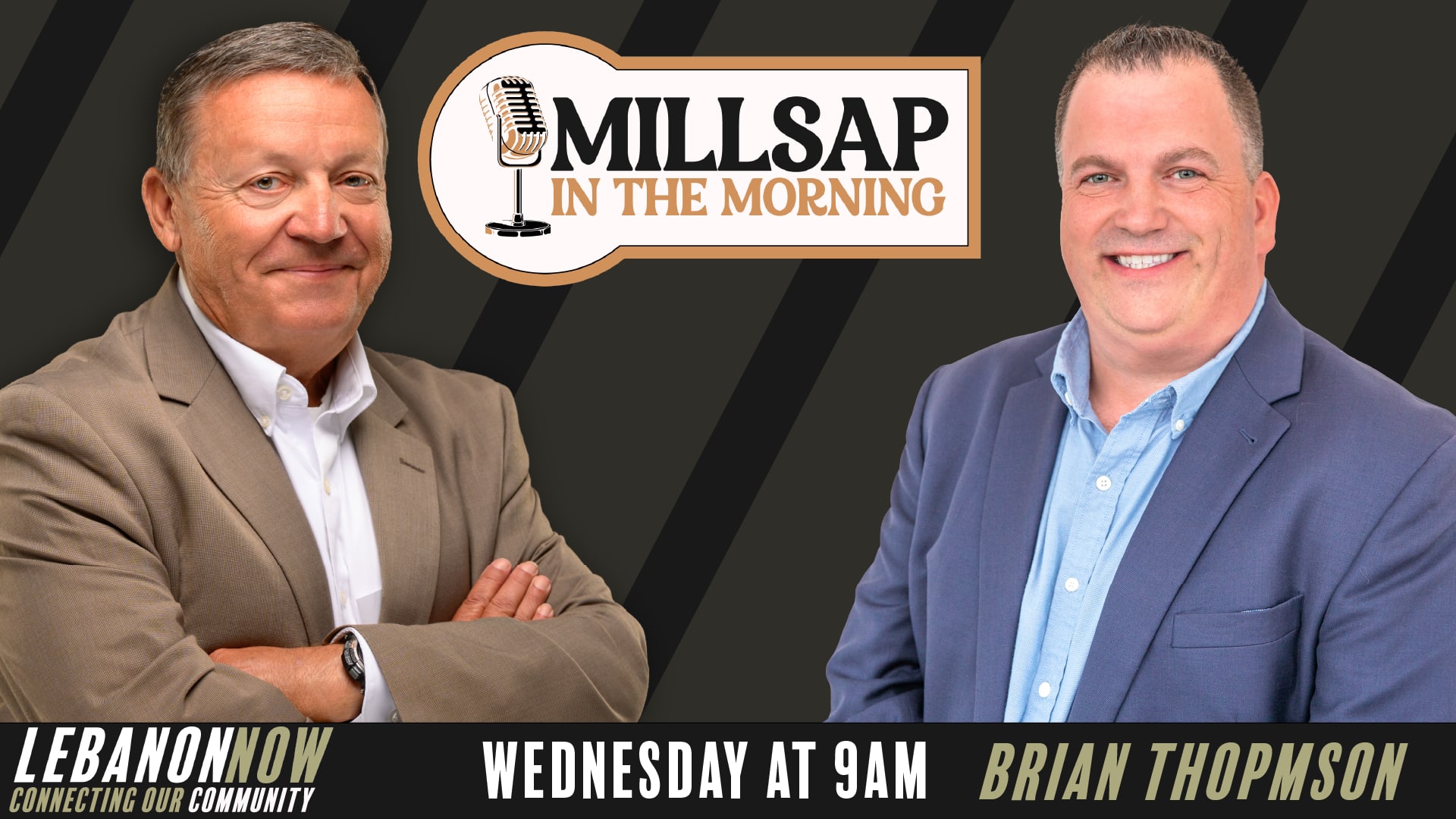
What do professional wrestling, giant Southeast Missouri mosquitoes, Cardinals baseball, housing developments and Lebanon’s workforce all have in common? Brian Thompson, apparently.
On Wednesday’s Millsap in the Morning, David Millsap sat down with Thompson for a conversation that started with his unusual path to Lebanon and eventually got around to his actual job: helping grow the economy of Lebanon and Laclede County.
Thompson is president of Lebanon Regional Economic Development Incorporated, better known as REDI. He has spent more than a decade working behind the scenes on business development, workforce issues and economic growth in our community. But Millsap wasn’t about to let him start there.
Before REDI, There Was Wrestling
Thompson grew up in Dexter, Missouri, a town known for barbecue, catfish and, according to Millsap, mosquitoes large enough to carry away a small child. He attended Three Rivers College in Poplar Bluff before heading to Arkansas State University in Jonesboro, studying journalism along the way.
But there was another career already developing: professional wrestling.
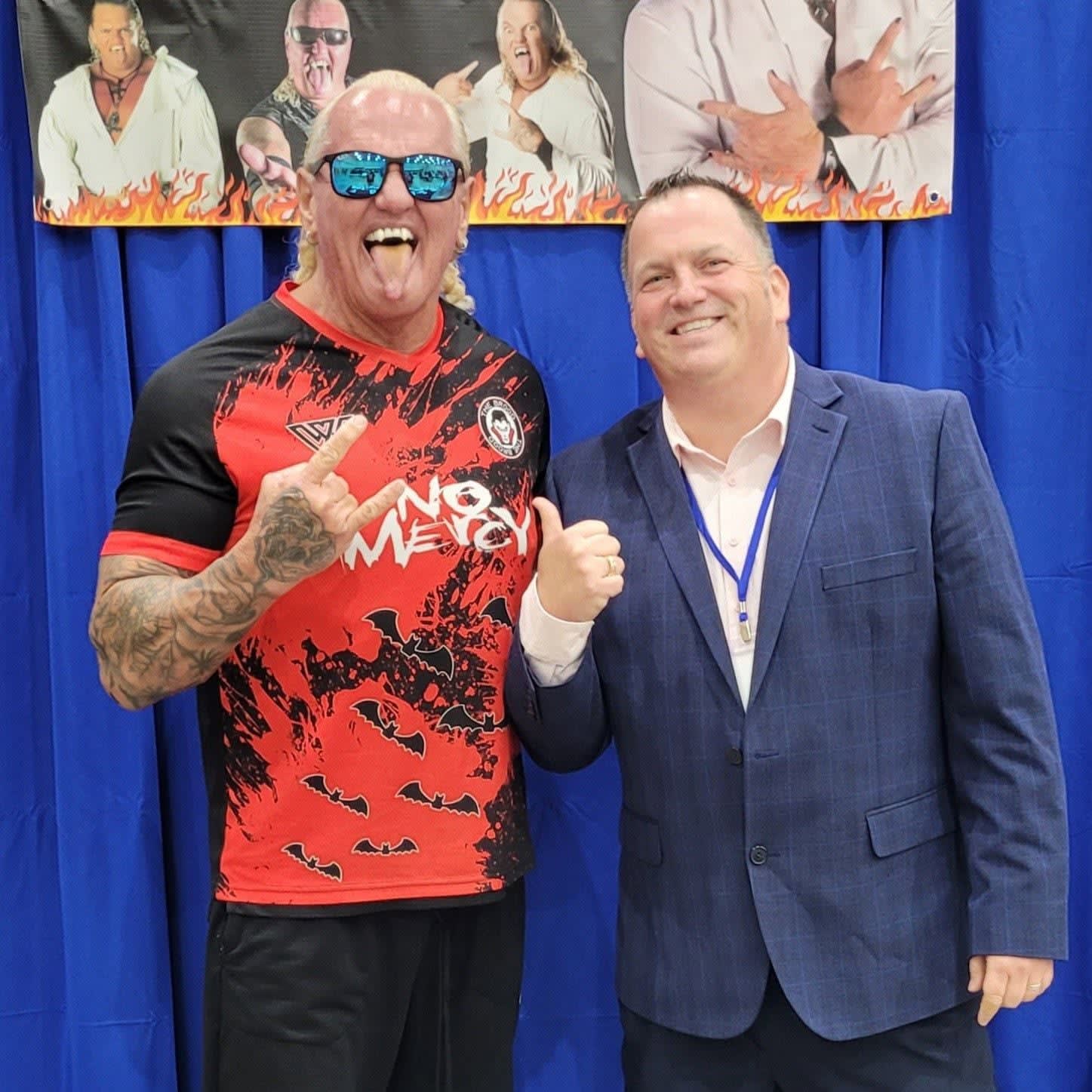
Thompson attended his first live World Wrestling Federation event in Cape Girardeau in 1987 when he was just six years old, and he was hooked. By 2000, at 19 years old, he had landed his first announcing job with a wrestling promotion. More than 26 years later, he still occasionally steps back into that world.
He has worked as an announcer, commentator, manager and promoter. He also admits to having six actual wrestling matches. Those matches, according to Thompson, were horrible. Fortunately for him, they are apparently difficult to find online.
His wrestling career also put him around some names even casual wrestling fans will recognize, including Hulk Hogan, Ric Flair, Bret “The Hitman” Hart, Hacksaw Jim Duggan, Jerry “The King” Lawler, Dusty Rhodes and Road Warrior Animal. He also worked for Missouri wrestling legend Harley Race and spent time around Memphis Championship Wrestling.
So yes, the guy talking about workforce statistics and retail gap studies has also been yelled at by angry wrestling fans and once had a woman named Hilda grab him by the back of his jacket at a show in Tuckerman, Arkansas. Economic development may actually be the safer career.
So What Does REDI Actually Do?
Eventually, Millsap got Thompson back to his day job.
Lebanon Regional Economic Development Incorporated has been around since 2004 and serves as an economic development partner for Lebanon and Laclede County. REDI is a 501(c)(6) nonprofit supported through partnerships with the City of Lebanon, Laclede County and the private sector. Thompson is not a city or county employee, although the organization works closely with both.
Ask Thompson what “economic development” means and he boils it down to two words: wealth creation.
That doesn’t just mean landing a giant factory. It could mean helping someone find a better-paying job, creating opportunities for a local business to expand, developing a stronger workforce, adding housing or helping students discover careers they never knew existed.
And there is no magic button. “There’s no one singular solution,” Thompson said.
Instead, economic development is a little bit of everything: business recruitment, existing business growth, workforce development, housing, childcare, education, infrastructure and a lot of relationship building.
A Lot Happens Before the Ribbon Cutting
Everyone sees the ribbon cutting. They don’t always see the months, and sometimes years, of conversations that happen before it.
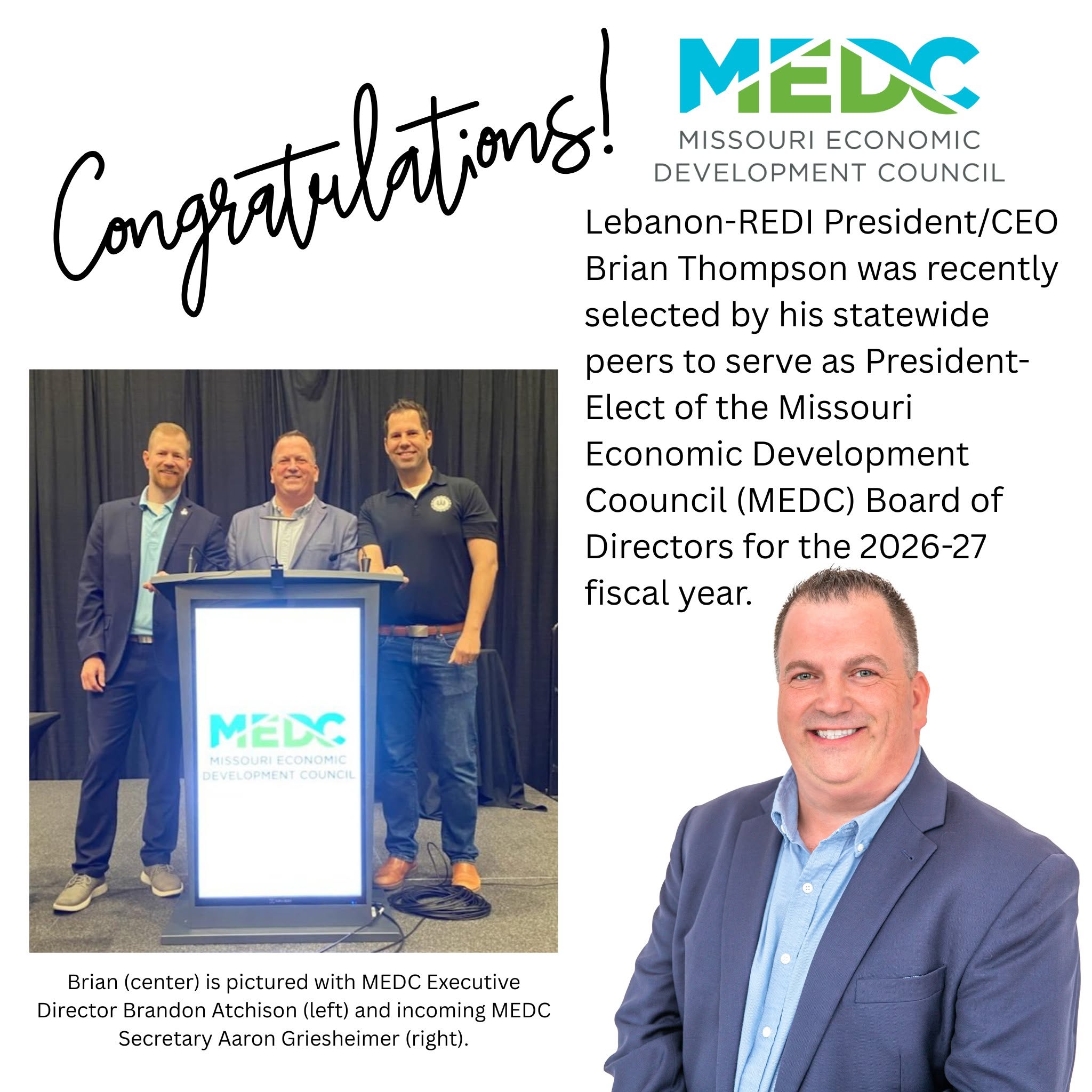
Thompson serves on and has worked with numerous local, regional and statewide organizations. He is currently president-elect of the Missouri Economic Development Council and has also been involved with organizations including COPE, HRDC, the Laclede County Drug Council and GO CAPS. Those relationships matter, and so does confidentiality.
When a business is considering expanding, relocating or investing in Lebanon, it may not be ready for everyone on Facebook to know about it five minutes later. That means a large portion of Thompson’s job happens quietly behind the scenes. Sometimes the public sees the result. Sometimes a project never happens at all. Either way, the conversations keep going.
About That Workforce
Millsap and Thompson also dug into an issue that affects nearly every employer in town: finding people to fill jobs.
Thompson said Laclede County unemployment has generally been running around 4% to 5% this year. That number has changed considerably during his time here. When Thompson arrived roughly 11 years ago, he was told 5.5% to 6% unemployment was probably about as low as the area could realistically expect. Then, a few years ago, unemployment dropped as low as 1.9%. Anyone who remembers seeing “Now Hiring” signs seemingly everywhere in town probably remembers that period.
But Thompson said the bigger question isn’t simply how many people are unemployed. It is how the community can help more people become employable. That can involve job training, education, recovery programs, mentorship and simply introducing someone to an opportunity they have never considered. Organizations including Elevate Lebanon and Lane Change are among those doing work in that area.
And sometimes workforce development starts with something much simpler: how we treat the teenager handing us our food at the drive-thru.
Thompson said he has participated in mock interviews with students who have talked about customers cursing at them because an order was wrong. That interaction may seem insignificant to the customer, but to a teenager deciding what they think about working, adulthood and even their hometown, it may not be insignificant at all.
Millsap admitted his wife occasionally has to remind him to say thank you at the drive-thru. Consider him publicly corrected.
What Does Lebanon Still Need?
This is probably the question Thompson hears all the time: What business does Lebanon need next?
There isn’t one simple answer. REDI has used retail gap studies to identify areas where Lebanon may have room for additional businesses. Thompson said there are opportunities in certain retail and restaurant categories and potentially additional grocery capacity.
But he also pointed out something that can get lost in the excitement over a new business announcement. The businesses already here matter. A lot.
Thompson said roughly 70% to 80% of new jobs are generally created by existing businesses. A ribbon cutting is exciting, but so is a business that has survived 50, 75 or 100 years. Cackle Hatchery is celebrating 90 years in business, while other longtime Lebanon businesses have reached the century mark. Those businesses didn’t just arrive. They stayed.
On the manufacturing side, Lebanon has a strong identity in aluminum fishing boat manufacturing, but Thompson would like to see additional diversification. Food processing is one possibility, particularly because it is among Missouri’s targeted industries.
Want More Workers? They Have to Live Somewhere
Workforce development quickly leads to another topic: housing.
Thompson said Census-based workforce data shows roughly 9,000 people travel into Laclede County from another county to work each day. That’s a lot of people who work here but don’t live here, and that matters when developers ask a pretty reasonable question before building new homes or apartments: Who is going to live in them?
Between housing studies and commuting data, Thompson said there is evidence of demand. New subdivisions, apartment developments and other housing projects can potentially turn some of those commuters into Laclede County residents.
Then comes another issue: childcare. Someone can have the skills, desire and opportunity to work, but if they cannot find childcare, they may still be unable to enter the workforce. It is another example of why economic development is rarely about one thing.
As Thompson put it, just when you think you know the answers, somebody changes the questions.
Lebanon Is Growing While Other Small Towns Are Shrinking
One thing Lebanon has going for it is growth.
Thompson said the area grew approximately 4.4% between 2020 and 2025. If that pace continues, Lebanon could be looking at roughly 8% growth by the next Census. That is significant at a time when many rural communities are dealing with exactly the opposite problem.
Of course, growth brings its own challenges. More people means more demand for housing, infrastructure, public safety and services. It also raises a question Lebanon will continue dealing with: How do you grow without losing the small-town feel people like about living here?
There probably isn’t a perfect answer, but Thompson believes Lebanon and Laclede County are in a good position.
And Yes, They Talked About Hotels
If you’ve ever wondered why Lebanon doesn’t have another major hotel, you’re not alone. The subject came up Wednesday.
Lebanon has hosted some major events over the years, and additional hotel capacity could potentially help attract more. But building a hotel isn’t as simple as noticing the parking lots are full on Saturday night.
Thompson said a hotel study conducted several years ago didn’t produce the numbers developers needed to make a new project work financially at that time. A hotel has to fill rooms on Monday, Tuesday and Wednesday too.
Still, Thompson believes there could be an opportunity for an additional hotel brand, particularly if it captures travelers who currently keep driving because their preferred chain isn’t available here. It’s something REDI continues to watch as the numbers change.
Showing Students What’s Already Here
The conversation wrapped up with one of Thompson’s favorite workforce programs: GO CAPS.
The program brings together juniors and seniors from Lebanon, Laclede County R-1 Conway, Richland, Laquey and Crocker. Around 150 seats are available across career areas including entrepreneurship and business, engineering and manufacturing, medicine and healthcare, and teaching professions.
These students aren’t spending all of their time sitting behind desks. They get out into businesses, industries and organizations to see what those careers actually look like. Before job shadowing begins, students work on communication, interviews, eye contact and professional etiquette. Then they head into the community for multiple rotations with local businesses and mentors.
Lebanon Now has hosted GO CAPS students for job shadows, giving students an opportunity to see the media, marketing and production side of a local business.
The idea behind it is pretty simple. You can’t expect a teenager to choose a career they don’t know exists. And you can’t complain that young people leave Lebanon if you’ve never shown them what they could come back to.
Near the end of the show, Thompson shared a quote he had recently saved: “Remarkable people aren’t rare. The challenge is creating enough opportunities to discover them.”
That might be a pretty good summary of the entire conversation. Economic development isn’t just about getting the next restaurant, factory or store. It’s about businesses, workers, students, housing, education, childcare and opportunities all working together.
And occasionally, apparently, professional wrestling.
Millsap in the Morning airs Wednesdays at 9 a.m. on Lebanon Now from the Ozark Fiber Studios in downtown Lebanon. More Lebanon Now stories and programming can be found at lebanonmonow.com.