Local News · Community
Millsap in the Morning: City Councilman Jaret Scharnhorst
By Lebanon Now Staff ·

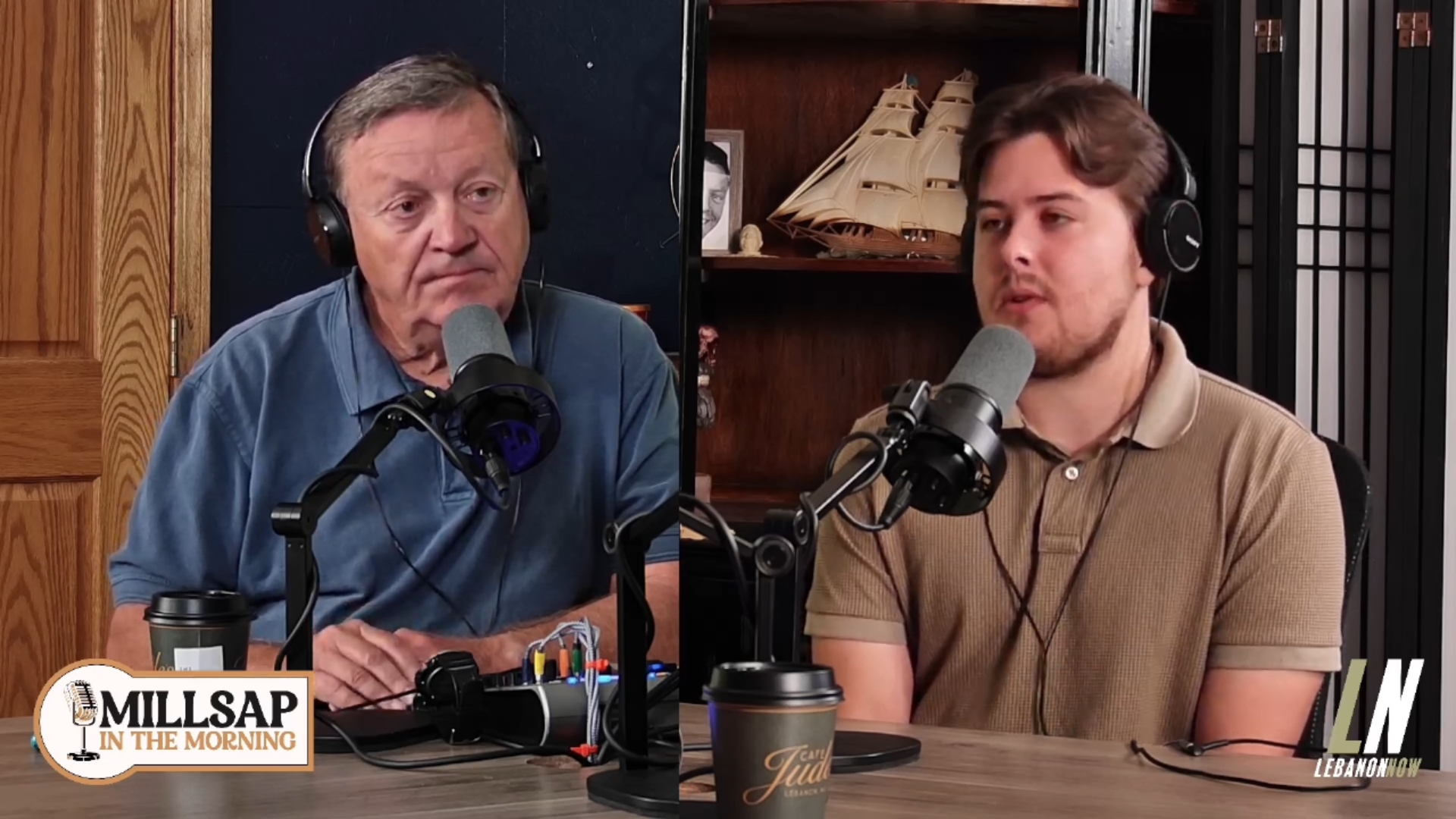
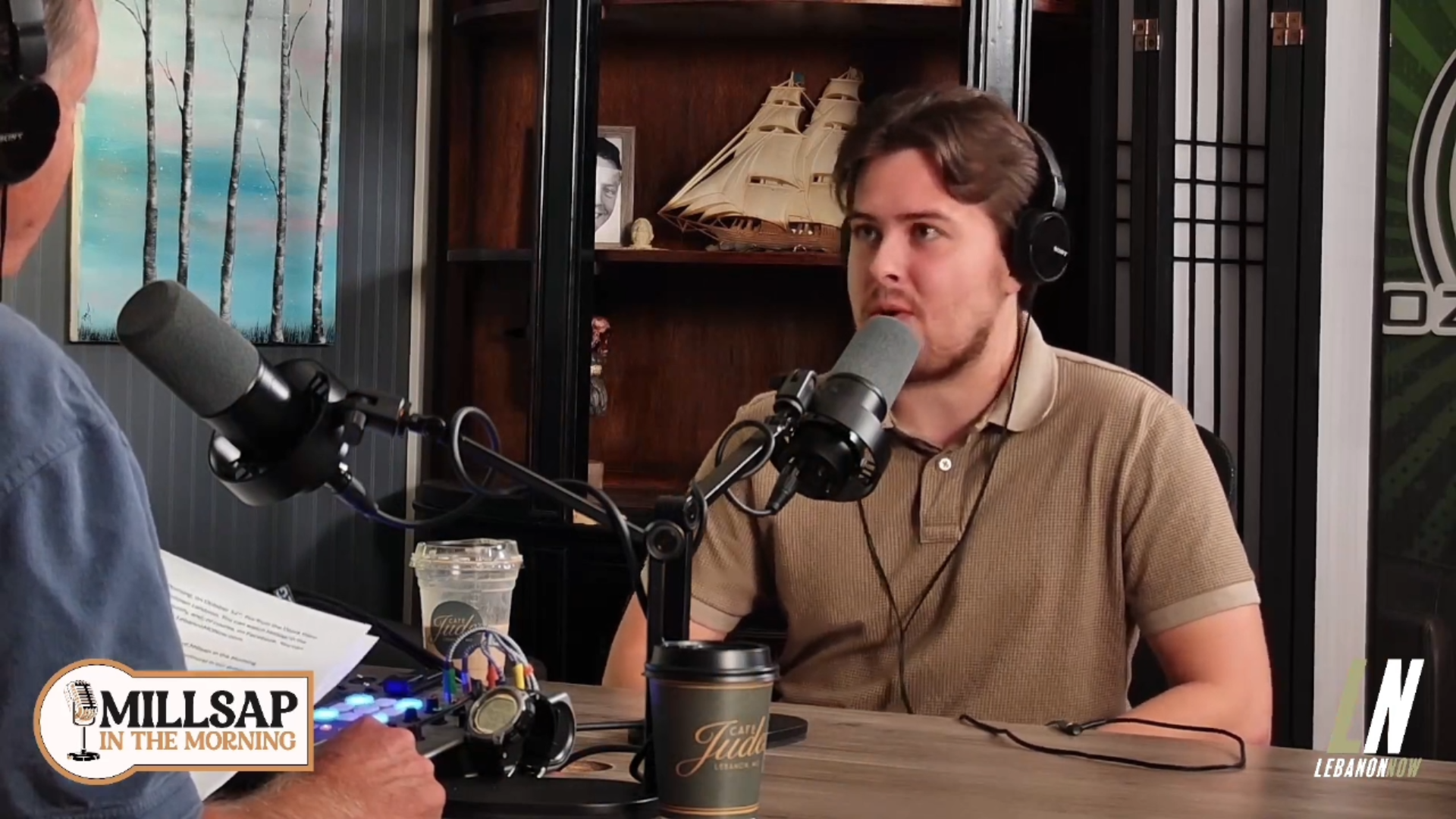
Lebanon City Councilman Jaret Scharnhorst joined David Millsap on Wednesday’s edition of Millsap in the Morning for a wide ranging conversation about several issues facing the City of Lebanon, including the controversial city rebranding effort, automated license plate readers, the Ice Cream Factory, potential data center development, and the future of the YMCA.
Scharnhorst, who joined the City Council in April and recently passed the Missouri bar examination, offered his perspective on the challenges of local government, balancing public concerns with city priorities, and the decisions council members will face in the coming months.
City Logo and $75,000 Branding Project
One of the biggest topics was Tuesday night’s City Council meeting, where a proposed new city logo and slogan failed in a 3-3 vote.
Scharnhorst was among those voting against the proposal, explaining that while he understands the city’s goals of modernizing its image, simplifying its color scheme, and improving marketing efforts, he was not satisfied with the design.
“I just don’t like it. It’s really as simple as that,” Scharnhorst said.
He acknowledged that the latest proposal was an improvement over the original design but questioned whether the city had made the right choice in hiring the marketing company responsible for the $75,000 branding project.
Scharnhorst also expressed concerns about the proposed slogan, “Build Your Journey Here,” suggesting it could imply that Lebanon is a temporary stop rather than a place to establish permanent roots.
Despite his objections, he recognized that the city’s investment included research and additional marketing materials beyond the logo itself.
He suggested reviewing other designs developed during the process and potentially seeking additional community input before making a final decision.
License Plate Readers and Privacy Concerns
The discussion turned to automated license plate readers used by the Lebanon Police Department.
Although Scharnhorst voted in favor of advancing an ordinance establishing regulations and safeguards for the technology, he remains concerned about its long-term implications.
His primary objection involves the potential expansion of surveillance technology and how information collected by these systems could eventually be misused.
Scharnhorst acknowledged the investigative benefits demonstrated by law enforcement but questioned what widespread adoption of the technology could mean for privacy in the future.
Millsap challenged that position, emphasizing the technology’s value in criminal investigations and arguing that documented misuse represents a relatively small percentage of law enforcement personnel.
Scharnhorst maintained that his concerns were less about current practices and more about how the technology might be used decades from now.
Red Fox Property and Dangerous Buildings
The Red Fox property on Route 66 was another major topic following a recent stabbing and subsequent city inspection.
Inspectors documented structural damage, blocked emergency walkways, debris, abandoned vehicles, and a lack of basic utilities. The property has since been declared unsafe.
Scharnhorst indicated that further city action appears likely, although he did not provide a specific timeline.
The conversation also addressed other deteriorating properties around Lebanon, including the former Bell Motel. Scharnhorst agreed that the property has become an eyesore but said he was unaware of any specific action currently planned.
Ice Cream Factory and City’s Financial Investment
Questions surrounding the Ice Cream Factory occupied a significant portion of the interview.
The city owns the manufacturing facility and previously approved up to $400,000 in electrical improvements intended to be repaid by the business operator.
With reports of payroll difficulties and foreclosure proceedings involving the current operator, questions remain about the city’s financial exposure and the facility’s future.
Scharnhorst explained that the city retains ownership of the building regardless of what happens to the private business operating inside it.
He also noted that the full $400,000 may not have been spent and suggested the electrical improvements could benefit future tenants.
Both Millsap and Scharnhorst discussed whether those upgrades might have been necessary regardless of who occupied the facility.
Scharnhorst expressed particular concern for employees reportedly experiencing payroll problems, noting that his own wife had previously considered employment there.
He also acknowledged questions surrounding the transfer of the business to its current operator and whether additional scrutiny should have occurred.
Potential Data Center Development in Lebanon
With news emerging about preliminary discussions involving a possible data center in Lebanon, Scharnhorst outlined his position on the industry.
He strongly opposes large hyperscale facilities, particularly those requiring substantial water resources, but said smaller operations deserve individual consideration.
Scharnhorst emphasized that any proposed development should be evaluated based on its actual infrastructure requirements, economic benefits, and potential impact on existing utility customers.
He argued that residents should not be responsible for financing infrastructure improvements needed by private data center operators.
While acknowledging potential economic benefits, Scharnhorst remains skeptical about the industry’s rapid expansion, particularly as demand for artificial intelligence continues growing.
He welcomed the city’s willingness to discuss the possibility publicly and emphasized the importance of educating residents before decisions are made.
YMCA and Cowan Civic Center
The future of the Cowan Civic Center and its relationship with the YMCA also received attention.
Scharnhorst indicated that he currently favors maintaining the YMCA’s involvement rather than returning facility operations directly to the city.
His concerns center primarily on finances.
According to figures discussed during the interview, city operation could result in an estimated annual operating loss of at least $300,000.
Scharnhorst questioned whether assuming those additional responsibilities would be financially prudent, particularly as the city has recently taken over golf course operations.
However, he acknowledged potential benefits of a city-operated recreation system that could combine access to the civic center, swimming pool, and golf course.
He stressed that no final decision has been made and that competing proposals deserve consideration.
Learning the Responsibilities of Public Office
Beyond individual issues, Scharnhorst reflected on his first six months serving on the City Council.
He described a significant learning curve involving city departments, infrastructure, constituent concerns, and the complexity of municipal decision-making.
Scharnhorst emphasized the importance of hearing from residents while recognizing that the most vocal participants do not necessarily represent the entire community.
He said his approach involves listening to different perspectives, researching issues independently, and making decisions based on what he believes best serves Lebanon.
The interview concluded with Millsap thanking Scharnhorst for his willingness to discuss difficult and sometimes controversial subjects publicly.
Scharnhorst reiterated his commitment to transparency and said he welcomes future opportunities to answer questions about city government.
Tune in to Lebanon Now every Wednesday at 9:00am for Millsap in the Morning.