Local News · Government
Missouri Supreme Court Rules Against Secretary of State in Redistricting Battle
By Lebanon Now Staff ·
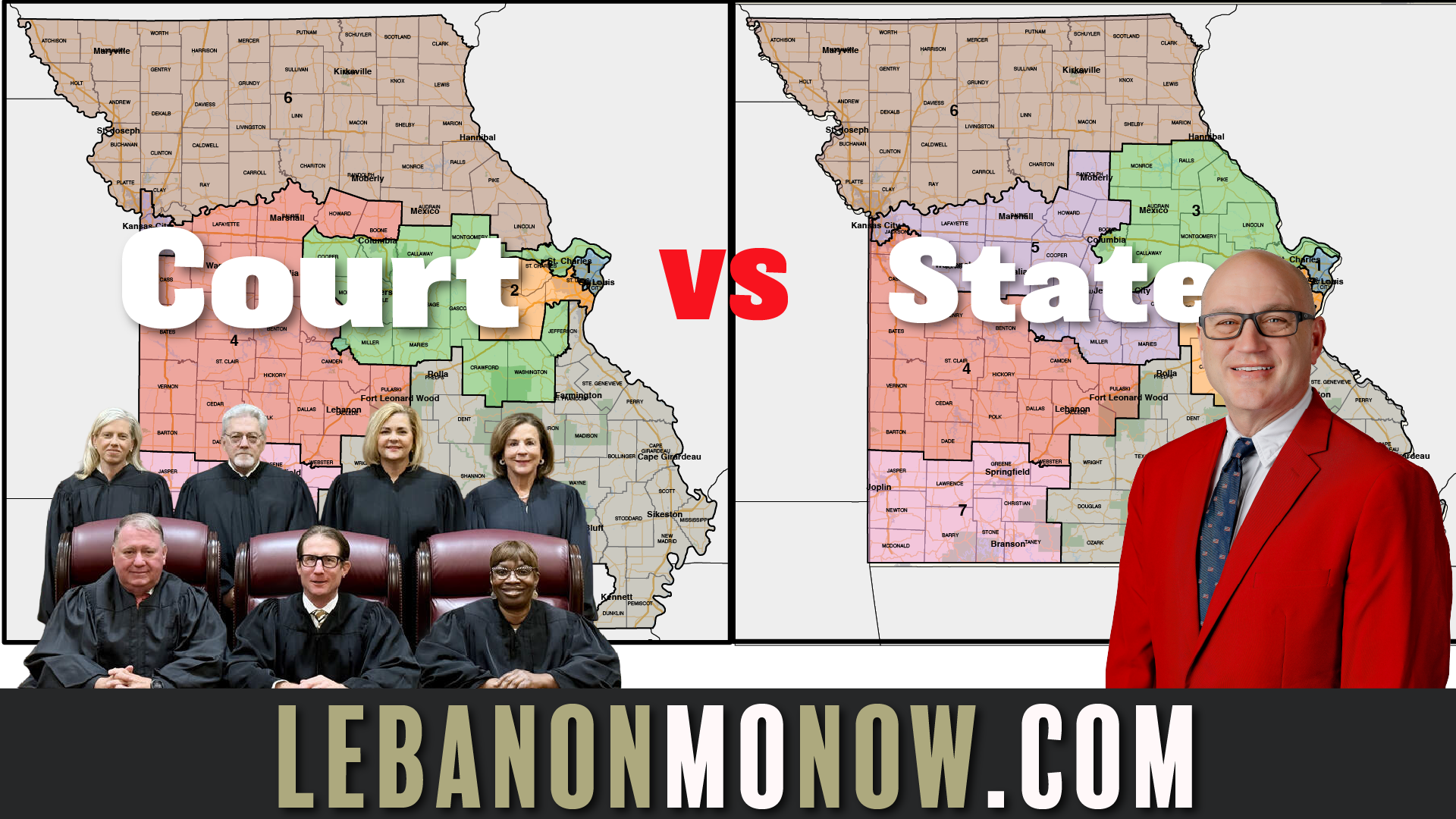
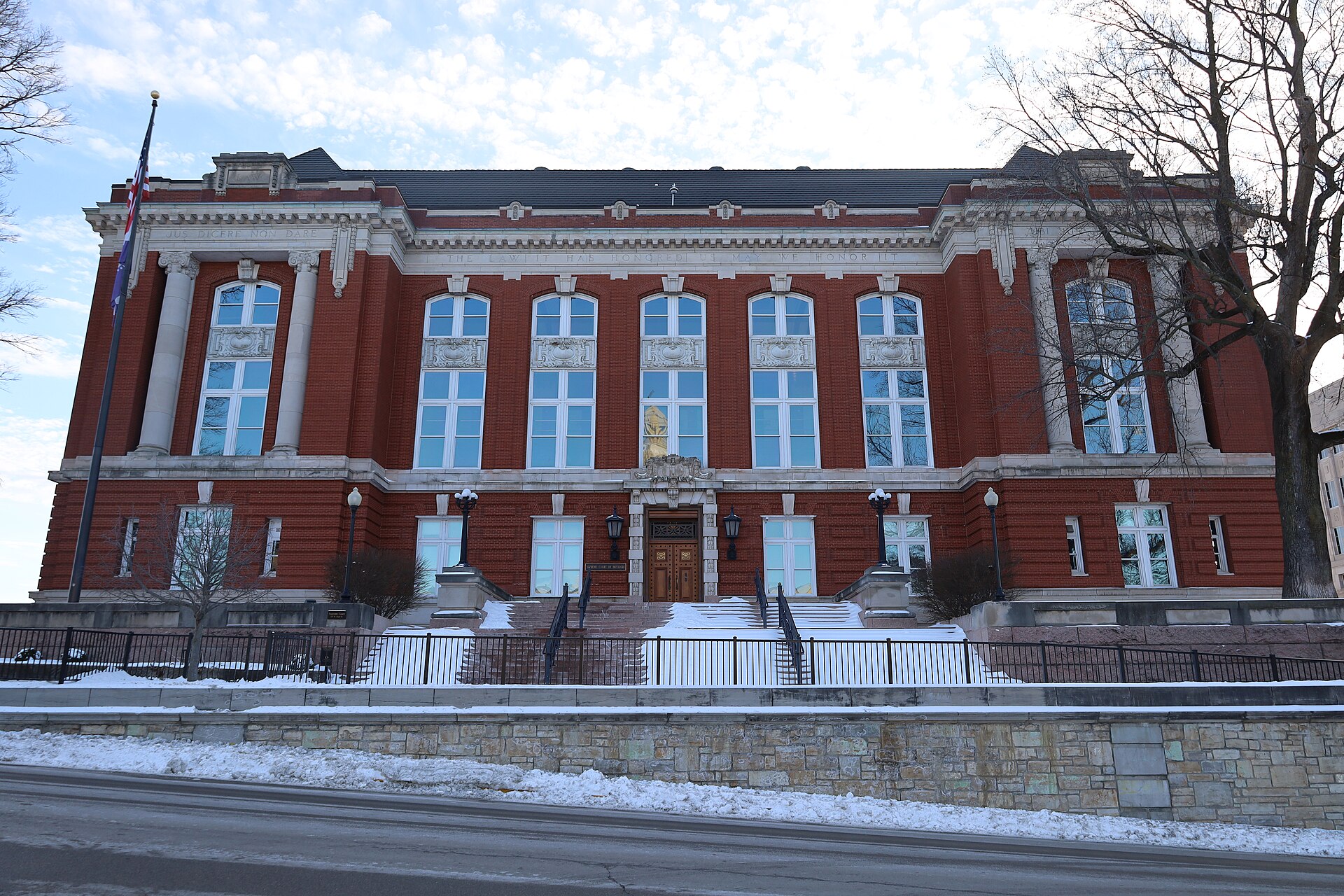
Missouri Supreme court building January 2025- WikipediaThe Missouri Supreme Court unanimously ruled Thursday against Secretary of State Denny Hoskins in the ongoing fight over Missouri’s 2025 congressional redistricting plan, ordering a referendum on the map onto the November ballot and blocking the new districts from being used unless voters approve them.
The decision means Missouri’s congressional districts adopted in 2022 remain in effect for the November 2026 general election. House Bill 1, the redistricting legislation passed during a special session in September 2025, did not take effect because opponents filed a legal, sufficient and timely referendum petition before the law’s effective date.
Hoskins had rejected the referendum on August 4, arguing that the Missouri Constitution did not allow voters to use the referendum process to challenge congressional redistricting passed by the General Assembly.
The Supreme Court disagreed.
The court pointed to Article III, Section 49 of the Missouri Constitution, which reserves to the people the power to approve or reject by referendum “any act of the general assembly.”
Congressional redistricting legislation, the court ruled, is one of those acts.
“The referendum petition was legal, sufficient, and timely, and the secretary incorrectly concluded otherwise,” the court concluded.
The ruling creates an unusual situation for Missouri’s 2026 elections. The new districts were used during the August primary, but they cannot be used for the November general election unless voters first approve HB 1.
While the political fight surrounding the map is very much a product of 2026, the constitutional question at the center of the case is anything but new.
In fact, Missouri has been here before.
Courts.mo.gov
A Power Missouri Voters Have Held for More Than a Century
Missouri voters added the initiative and referendum process to the state constitution in 1908, reserving for themselves a direct role in the state’s lawmaking process.
The referendum allows citizens, after gathering the required number of signatures, to place most acts passed by the General Assembly before voters for approval or rejection.
Congressional redistricting became one of the early major tests of that power.
Following the 1920 election, a Republican landslide changed control of both chambers of the Missouri General Assembly.
The congressional map then in place had been drawn by a Democratic majority following the 1900 census and was designed to produce as many as 15 Democratic congressional seats out of 16, according to the Missouri Supreme Court’s own historical review earlier this year.
In 1921, the newly Republican-controlled General Assembly attempted to replace that map with one expected to produce between eight and 13 Republican members of Congress.
But lawmakers didn’t have the final word.
The new map was placed before Missouri voters through a referendum in 1922.
Missouri voters rejected it by a significant majority.
The history is particularly significant now.
More than a century later, Missouri voters are once again being asked to decide whether a congressional map passed by their General Assembly should become law.
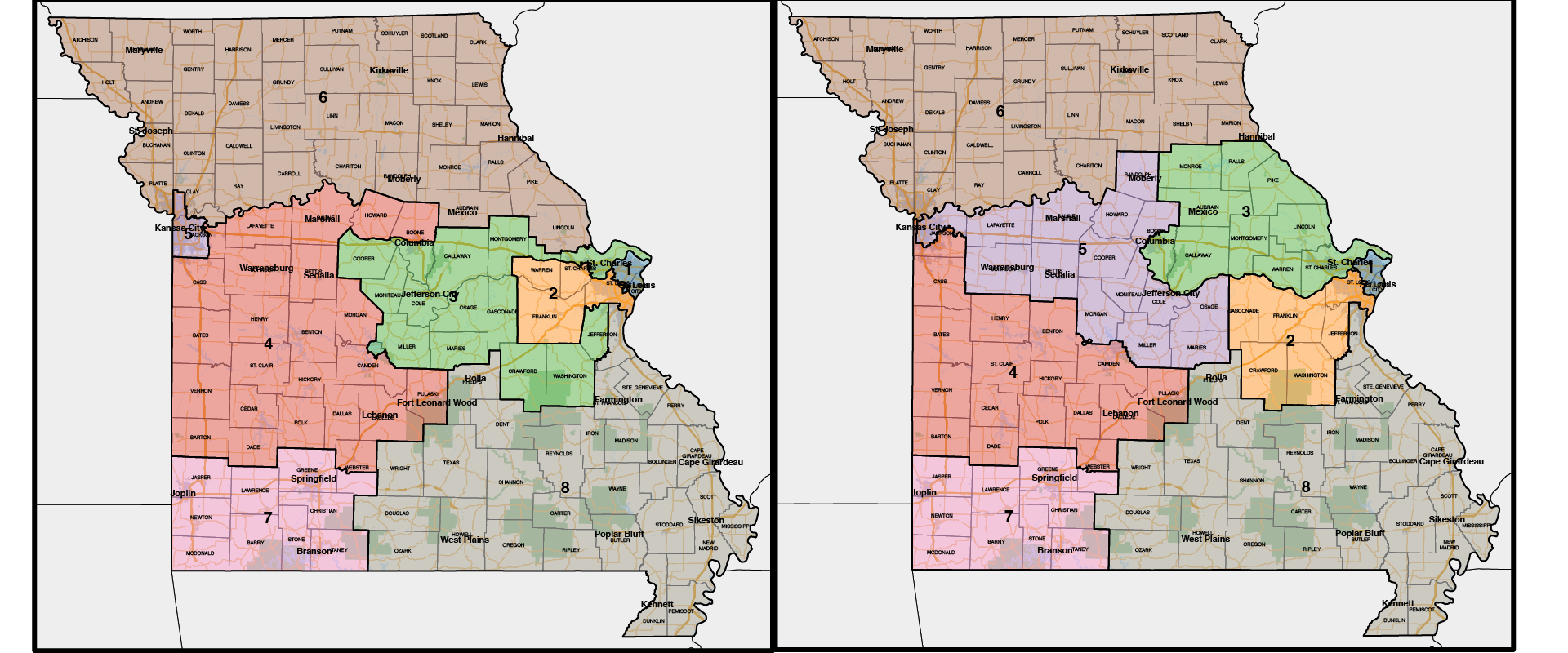
Missouri Redistricts Again in 2025
Missouri had already adopted new congressional districts in 2022 following the 2020 census.
But in 2025, Gov. Mike Kehoe called lawmakers into a special legislative session that included congressional redistricting.
The General Assembly passed House Bill 1 on September 12, 2025. HB 1 would repeal the congressional districts established in 2022 and replace them with a new map.
Opponents quickly began pursuing a referendum.
That effort resulted in several legal disputes, including a fight over exactly when referendum organizers were legally allowed to begin collecting signatures.
Organizers initially submitted petition samples before the governor signed HB 1.
Hoskins rejected those samples on September 26, taking the position that signatures gathered before the governor signed the legislation could not be verified or counted.
Kehoe signed HB 1 on September 28.
Organizers submitted another petition sample the following day, but Hoskins did not approve it until October 14. His office again took the position that signatures gathered before that approval could not be counted.
Organizers continued collecting signatures anyway.
Approximately 32,600 signatures were collected before the governor signed HB 1, and another approximately 70,200 were collected before Hoskins approved the petition form.
That left about 102,800 signatures initially in dispute.
Ultimately, organizers collected far more.
On December 9, they delivered 691 boxes containing more than 300,000 purported signatures supporting the referendum.
That December 9 filing would become critical.
Did the New Map Ever Take Effect?
At the center of the legal fight was a basic but consequential question.
If opponents had filed a legal and sufficient referendum petition before HB 1’s effective date, did the new congressional map ever actually become law?
The Missouri Supreme Court had addressed that possibility earlier this year in Maggard v. State.
The court explained that if the December 9 referendum petition was ultimately determined to be sufficient, HB 1 did not take effect on December 11, 2025.
Instead, the legislation had been referred to Missouri voters.
The Supreme Court repeated that conclusion Thursday:
“HB 1 did not take effect on December 11, HB 1 was ‘referred to the people’ as of December 9, and HB 1 ‘shall take effect when approved by a majority of the votes cast thereon, and not otherwise.’”
Everything therefore depended on whether the referendum petition was legally sufficient.

Hoskins Rejects the Referendum
Hoskins had until 5 p.m. on August 4 to make that determination.
At approximately 4 p.m. that day, he issued a Certificate of Insufficiency.
But Hoskins did not reject the petition because organizers lacked enough signatures.
Instead, he determined that the Missouri Constitution did not authorize voters to use a referendum against congressional redistricting legislation passed by the General Assembly.
He directed that the referendum not appear on the November ballot.
That distinction became extremely important.
Because Hoskins did not cite insufficient signatures or an untimely filing as reasons for rejecting the petition, the Supreme Court determined those arguments had been waived. The court said the secretary had conceded that the referendum was timely filed and contained at least the constitutionally required number of signatures.
That left one central question:
Can Missouri voters use the referendum process to reject a congressional map passed by the General Assembly?

The Supreme Court Says Yes
The Missouri Supreme Court unanimously answered that question Thursday.
The court began with the language of the Missouri Constitution itself.
Article III, Section 49 states:
“The people … reserve power to approve or reject by referendum any act of the general assembly, except as hereinafter provided.”
The key words were “any act.”
Congressional redistricting legislation is an act of the General Assembly, the court concluded, and nothing in the Missouri Constitution specifically exempts congressional redistricting legislation from referendum.
“The language in article III, section 49 subjects ‘any act of the general assembly’ to a referendum as the default,” the court wrote.
There are constitutional provisions specifically preventing referendums against certain redistricting plans involving Missouri House and Senate districts.
But those provisions apply to state legislative redistricting plans.
There is no similar exception for congressional districts drawn through legislation passed by the General Assembly.
The court said that absence matters.
“Because no such explicit exception for legislation drawing new congressional districts is found anywhere in the Missouri Constitution, the broad default language in article III, section 49 subjecting ‘any act of the general assembly’ to referendum applies.”
Missouri Courts Had Addressed This Before
Thursday’s decision did not create the idea that congressional maps can be subjected to referendum.
Missouri courts had discussed the issue decades earlier.
In Preisler v. Hearnes in 1962, the Missouri Supreme Court noted that voters dissatisfied with even otherwise valid congressional redistricting had a remedy through Missouri’s initiative and referendum provisions.
A decade earlier, in State ex rel. Moore v. Toberman, the court discussed congressional redistricting in the context of Missouri’s referendum process and noted that laws not specifically exempted should generally remain subject to referendum.
Federal precedent goes back even further.
In 1916, the U.S. Supreme Court rejected an argument that allowing voters to use a referendum against congressional redistricting violated the Elections Clause of the U.S. Constitution.
More than a century later, the U.S. Supreme Court reaffirmed the principle in Moore v. Harper in 2023, concluding that congressional redistricting remains subject to a state’s constitutional lawmaking process, which can include both a governor’s veto and a referendum.
Missouri Comes Full Circle
The similarities between the two periods are striking.
In 1921, following a change in political control of the Missouri Legislature, lawmakers passed a congressional map intended to dramatically change the partisan makeup of Missouri’s congressional delegation.
Citizens used the referendum process to challenge it.
In 1922, Missouri voters rejected the map.
More than a century later, lawmakers passed another congressional map during an unusual mid-decade redistricting effort.
Citizens again turned to the referendum process.
This time, the Secretary of State argued that congressional redistricting could not be challenged through referendum.
On September 3, 2026, the Missouri Supreme Court unanimously ruled otherwise.
What Happens Now
The Supreme Court ordered Hoskins to issue a certificate declaring the referendum sufficient and place it on the November 2026 general election ballot.
The court also prohibited the secretary and those acting with him from implementing or using the congressional districts contained in HB 1 unless Missouri voters approve the legislation.
For November, Missouri returns to the congressional districts adopted in 2022.
If voters approve HB 1, the 2025 redistricting legislation can take effect 30 days after the election.
If voters reject it, HB 1 does not take effect.
More than a century after Missouri voters rejected a congressional map through referendum in 1922, they will once again have the final say on congressional districts passed by their Legislature.