Local News
Who Has the Final Say? Missouri Voters and State Government Have Clashed Repeatedly Over the Will of the People
By Lebanon Now Staff ·

Who Has the Final Say? Missouri Voters and State Government Have Clashed Repeatedly Over the Will of the People

Over the past three years, Missouri has seen a series of clashes over one fundamental question: when citizens use the ballot box to make laws themselves, how much authority should elected officials have to change those decisions afterward?
Missouri’s Constitution gives citizens the power to propose laws and constitutional amendments through initiative petitions and to challenge acts of the General Assembly through referendum.
Recent events have repeatedly tested those powers.
The circumstances are not all the same. In one case, lawmakers directly repealed portions of a law voters approved. In another, lawmakers are asking voters to repeal a constitutional amendment. Lawmakers also attempted to make citizen-initiated constitutional amendments significantly more difficult to approve. Most recently, the Missouri Supreme Court unanimously ruled that the Secretary of State incorrectly rejected a referendum challenging the state’s new congressional map.
Together, the cases show an ongoing debate over the balance of power between Missouri voters and the government they elect.

Proposition A: Voters Approve Paid Sick Leave, Legislature Repeals It
In November 2024, Missouri voters approved Proposition A.
The citizen initiative increased Missouri’s minimum wage to $13.75 in 2025 and $15 in 2026, provided for future adjustments based on the Consumer Price Index beginning in 2027 and established earned paid sick leave requirements.
Missouri Secretary of State: 2024 Ballot Measures
Less than a year later, the Missouri General Assembly changed significant portions of what voters had approved.
House Bill 567 maintained the scheduled increase to a $15 minimum wage in 2026 but repealed the future automatic inflation adjustments and the voter-approved paid sick leave requirements. Gov. Mike Kehoe signed the legislation in July 2025.
Missouri Senate: House Bill 567
Because Proposition A amended state statute rather than the Missouri Constitution, the General Assembly retained the legal authority to amend or repeal it.
The result was that Missouri voters approved paid sick leave and future inflation-based minimum-wage adjustments in November 2024, and the General Assembly and governor removed those provisions in 2025.

Amendment 3: Voters Approve It, Legislature Asks Them to Reconsider
Missouri voters also approved Amendment 3 in November 2024, adding reproductive healthcare protections to the Missouri Constitution.
Because Amendment 3 became part of the Constitution, lawmakers could not simply repeal it through ordinary legislation.
Instead, the General Assembly approved HCS HJR 73, placing another proposed constitutional amendment before Missouri voters on November 3, 2026.
The official ballot language states that the proposal would “repeal the 2024 voter-approved Amendment providing reproductive healthcare rights, including abortion through fetal viability,” and replace it with different constitutional provisions.
Missouri Secretary of State: 2026 Ballot Measures
There is an important distinction between this and Proposition A.
The legislature itself has not overturned Amendment 3. Because it is part of the Missouri Constitution, voters must approve another constitutional amendment to replace it.
Missourians will therefore be asked in November 2026 whether to reverse the constitutional amendment they approved two years earlier.

Amendment 4: An Attempt to Raise the Threshold for Citizen Initiatives
The debate over voter power has not been limited to individual issues voters previously approved.
During a special legislative session, the General Assembly proposed Amendment 4, which would have changed the rules governing how citizens amend the Missouri Constitution through initiative petition.
Under the current system, a citizen-initiated constitutional amendment can be approved by a simple statewide majority.
Amendment 4 would have required a citizen-initiated constitutional amendment to receive a majority of votes statewide and a majority of votes in every Missouri congressional district.
That meant a proposed constitutional amendment could have received more “yes” votes than “no” votes across Missouri and still failed if it did not receive majority support in even one congressional district.
The proposal did not eliminate Missouri’s initiative or referendum powers, but it would have substantially increased the approval requirement for citizen-initiated constitutional amendments.
Missouri voters rejected Amendment 4 at the August 4, 2026 primary election.
Missouri Secretary of State: 2026 Ballot Measures
Missouri Secretary of State: Election Results
The defeat meant the existing statewide-majority requirement remained in place.
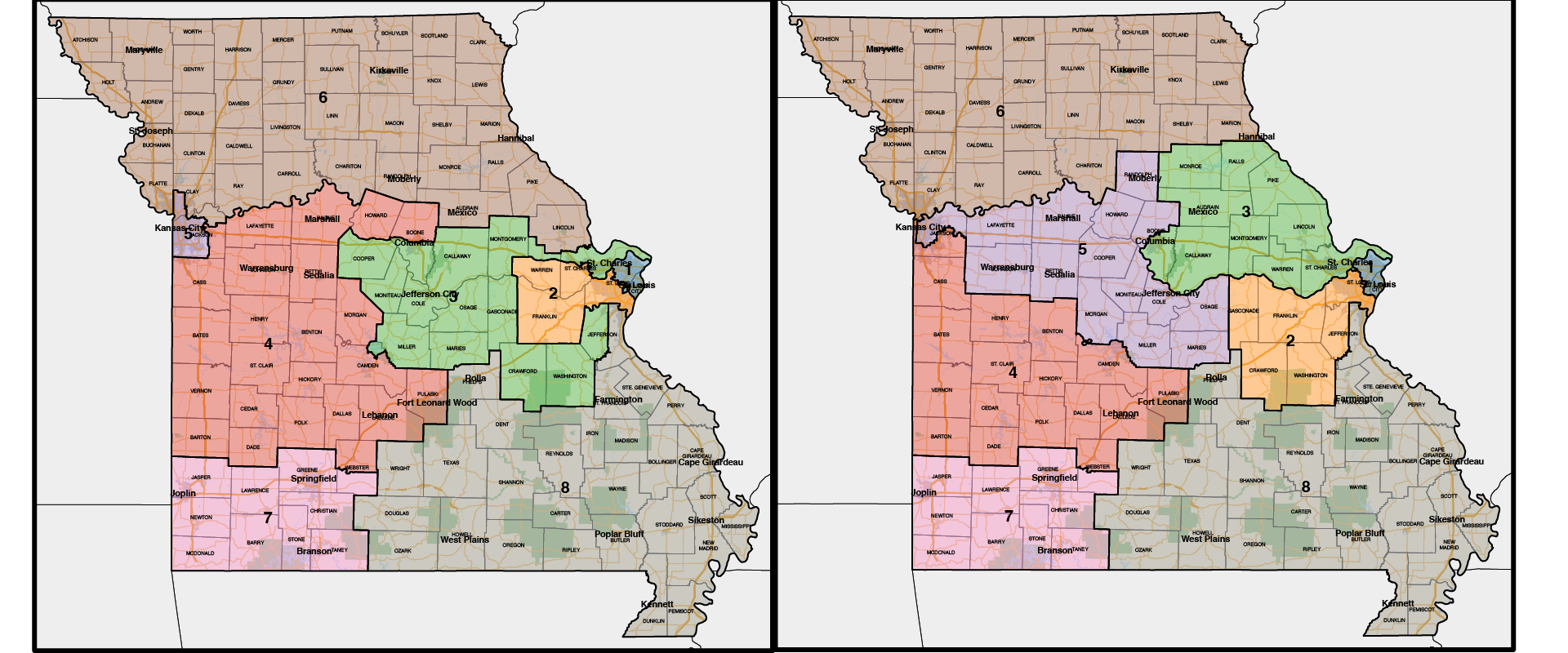
Congressional Redistricting: A Fight Over Whether Voters Could Vote At All
The congressional redistricting dispute raised a different issue.
During a special legislative session in 2025, the General Assembly passed House Bill 1, replacing Missouri’s existing congressional districts with a new map.
Opponents responded by using Missouri’s referendum process. Organizers submitted a referendum petition challenging HB 1 and gathered signatures seeking to put the legislature’s map before Missouri voters.
Secretary of State Denny Hoskins ultimately determined that the referendum petition was insufficient, arguing that Missouri’s Constitution did not authorize a referendum on congressional redistricting plans passed by the General Assembly.
The dispute reached the Missouri Supreme Court.
On September 3, 2026, the court unanimously ruled that the referendum petition was legal, sufficient and timely and that the Secretary of State had incorrectly concluded otherwise.
The court ordered Hoskins to certify the referendum and place it on the November 2026 ballot.
Supreme Court of Missouri: Opinion in SC101805
The court based its decision on Article III, Section 49 of the Missouri Constitution, which authorizes referendum petitions challenging “any act of the general assembly” unless a constitutional exception applies.
The referendum has now been certified for the November 3 ballot as Proposition A.
According to the official ballot language, a “yes” vote approves House Bill 1 and the congressional boundaries passed by the General Assembly in 2025. A “no” vote leaves the congressional boundaries enacted in 2022 in place.
Missouri Secretary of State: 2026 Ballot Measures
This dispute differs significantly from the fight over the 2024 Proposition A.
The question was not whether lawmakers could later change a law voters had enacted.
It was whether Missouri citizens could use their constitutional referendum power to force a statewide vote on an act of the General Assembly.
The Missouri Supreme Court unanimously ruled that they could.

Amendment 6: Voters Asked to Protect Their Initiative and Referendum Powers
Another proposal on the November ballot directly addresses how much authority lawmakers should have over laws enacted by Missouri voters.
Amendment 6 reached the ballot through the citizen initiative process.
According to the official ballot language, Amendment 6 would make initiative and referendum a fundamental right, prohibit the legislature from weakening initiative or referendum powers and preserve existing majority-vote and signature requirements.
It would also prohibit the General Assembly from changing or repealing laws enacted through the initiative process, or passing laws similar to those rejected by referendum, without approval from at least 80% of both chambers.
The fair ballot language explains that modifications to laws enacted through the initiative process would have to be referred back to the people following approval by at least 80% of each chamber of the General Assembly.
It would also preserve the current requirement that a simple statewide majority of votes cast is sufficient to enact a law or constitutional amendment through the initiative process.
Missouri Secretary of State: 2026 Ballot Measures
“For more than 118 years, Missourians have had the power to put issues directly before the voters,” said Eric Bronner, co-founder of Veterans for All Voters, a supporter of Amendment 6, in a news release. “Amendment 6 is about protecting that right and making sure that when Missourians vote for something, politicians can’t simply undo their decision after the election.”
Amendment 6 itself also became the subject of a legal fight over whether voters would get to consider it.
Secretary of State Denny Hoskins initially issued a certificate of insufficiency for the initiative. The dispute ultimately reached the Missouri Supreme Court, which reversed that decision and ordered the measure onto the November ballot.
Missouri Secretary of State: Amendment 6 Certificate
Missourians will now decide Amendment 6 on November 3.
A Pattern of Battles Over Voter Power
The legal circumstances surrounding these cases are different, and those distinctions matter.
With Proposition A, voters enacted a state law in 2024. The General Assembly had the legal authority to change that statute and used that authority in 2025 to repeal the paid sick leave provisions and future automatic minimum-wage adjustments voters had approved.
With Amendment 3, voters amended the Missouri Constitution. The General Assembly cannot simply repeal that amendment, so lawmakers have instead placed another constitutional amendment before voters asking them to replace it.
With Amendment 4, lawmakers proposed changing the rules themselves by requiring citizen-initiated constitutional amendments to win not only statewide but in every congressional district. Voters rejected that proposal in August 2026.
In the congressional redistricting fight, citizens attempted to use their referendum power to challenge a law passed by the General Assembly. The Secretary of State rejected the referendum before the Missouri Supreme Court unanimously ruled that the petition was legal, sufficient and timely and ordered it onto the ballot.
And with Amendment 6, citizens are now asking voters to place additional protections for initiative and referendum directly into the Missouri Constitution, including restrictions on the legislature’s ability to change laws voters enact themselves.
These are not identical situations, and describing all of them simply as the government “overturning the will of the voters” would leave out important legal differences.
But they are all part of the same larger debate Missouri has been having over the past several years.
When Missourians make decisions directly at the ballot box, who should have the final say: the voters or the people they elect?